The Question Is Usually Asked Too Late
The scenario below is a composite, not any one project.
A mixed-use building shows water at the podium level eighteen months after occupancy. A restoration contractor opens the walls, dries the framing, hauls the wet sheathing away and closes up with new material. The carrier pays. A year later the leaks come back. By the time anyone asks a forensic consultant what went wrong, the failed flashing is in a landfill. The only photographs are phone shots with no scale and no moisture readings.
Nobody in that story did anything unusual. What was missing was a person whose job was to treat the failure as evidence before it was treated as a repair.
Most teams frame “When should we bring in an expert?” around filing dates and report deadlines. From the construction side, the building sets the schedule. Construction evidence is physical. It dries out, corrodes, gets cleaned up and gets replaced. On most losses somebody has a good reason to fix it quickly. This article covers what a construction forensics expert can do at each point after a problem is discovered, where the evidence lives besides the walls and what is lost when the expert arrives after the decisions have been made.
Why Construction Evidence Has a Short Life
A failed assembly tells its story through details that do not survive handling. The lap of a flashing over a weather-resistive barrier. The direction a stain runs down a stud. Whether a sealant joint failed at the bond line or tore through the middle. Which fasteners are corroded and which are clean. How far the wetting extends from the opening and whether it follows a pattern or sits in one bay.
Ordinary, reasonable work on the building changes every one of those details:
- Drying. Moisture readings taken the week of the loss and readings taken after the dehumidifiers have run are different data sets. Once the materials equilibrate, the wetting pattern that pointed to the source is gone.
- Demolition. A demolition crew removes material to reach sound substrate. Preserving the interface where the failure began is not their job. Once the flashing and the barrier are in a dumpster, nobody can measure the lap.
- Cleaning and treatment. Staining, deposits and corrosion products are often cleaned or treated during remediation, even though they recorded how long water moved and where it came from.
- Repair. A permanent repair replaces the failed component with a new one built to a different detail. After that, whether the original was built to the drawings can only be answered from photographs and memory.
Early in my forensic career I prepared repair cost estimates for construction defect cases. An estimate like that has to be tied to conditions someone actually observed and recorded. When the original work was gone and nobody had documented it, there was much less to tie it to.
None of this means repairs should stop. It means that deciding what to open, what to keep and how to document it is a construction decision. Someone qualified should make it before the work goes ahead.
What an Expert Can Do at Each Point After a Problem Is Discovered
An expert is most valuable where decisions about the building cannot be undone. The points below follow the order they usually come up on a real loss.
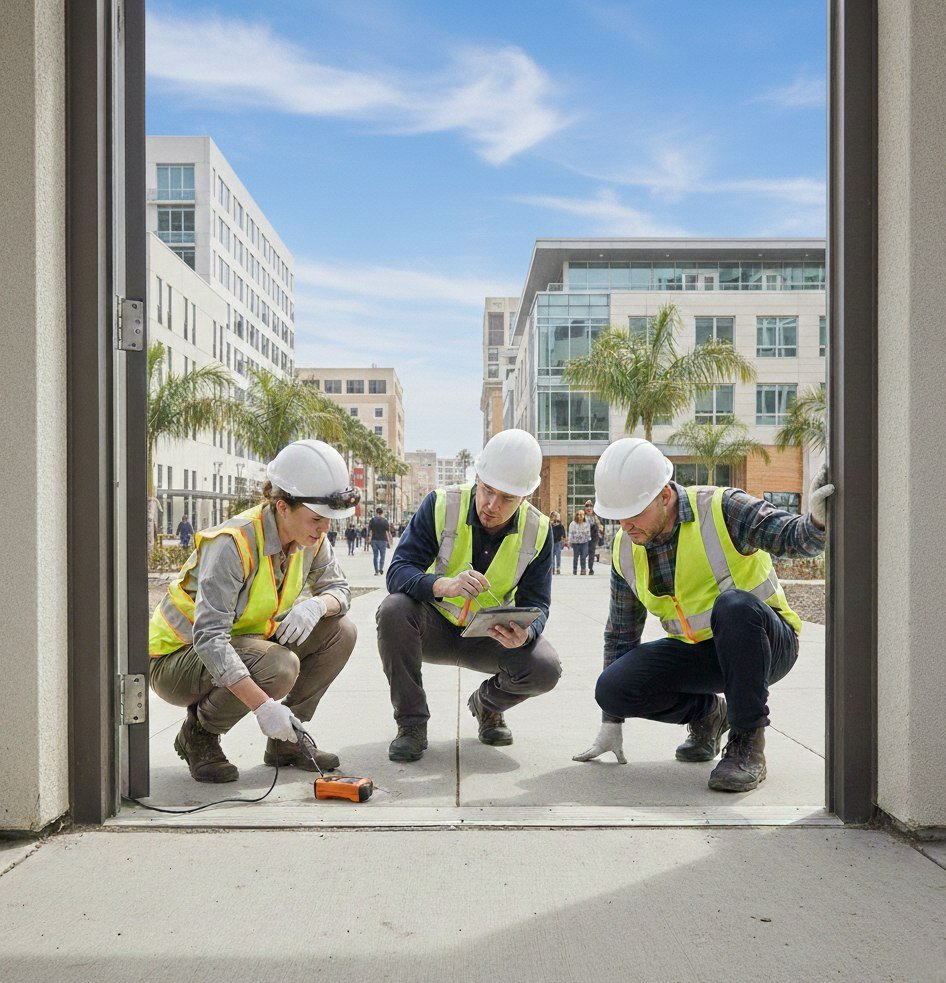
- Before emergency mitigation is finished. Mitigation has to go ahead. Water has to be stopped and wet materials dried to protect the structure and the occupants. The expert works alongside it, mapping moisture with readings located on a sketch, taking photographs with scale and orientation, noting active water paths and listing the components that should not be thrown out.
- Before permanent repairs. This is where most evidence is lost. The expert separates areas that can be repaired now from areas that should stay open, be photographed in place or be removed intact and stored. Where many units or elevations show the same condition, the expert can often document a representative set in detail and release the rest for repair. The building keeps moving and the causation question is still answerable.
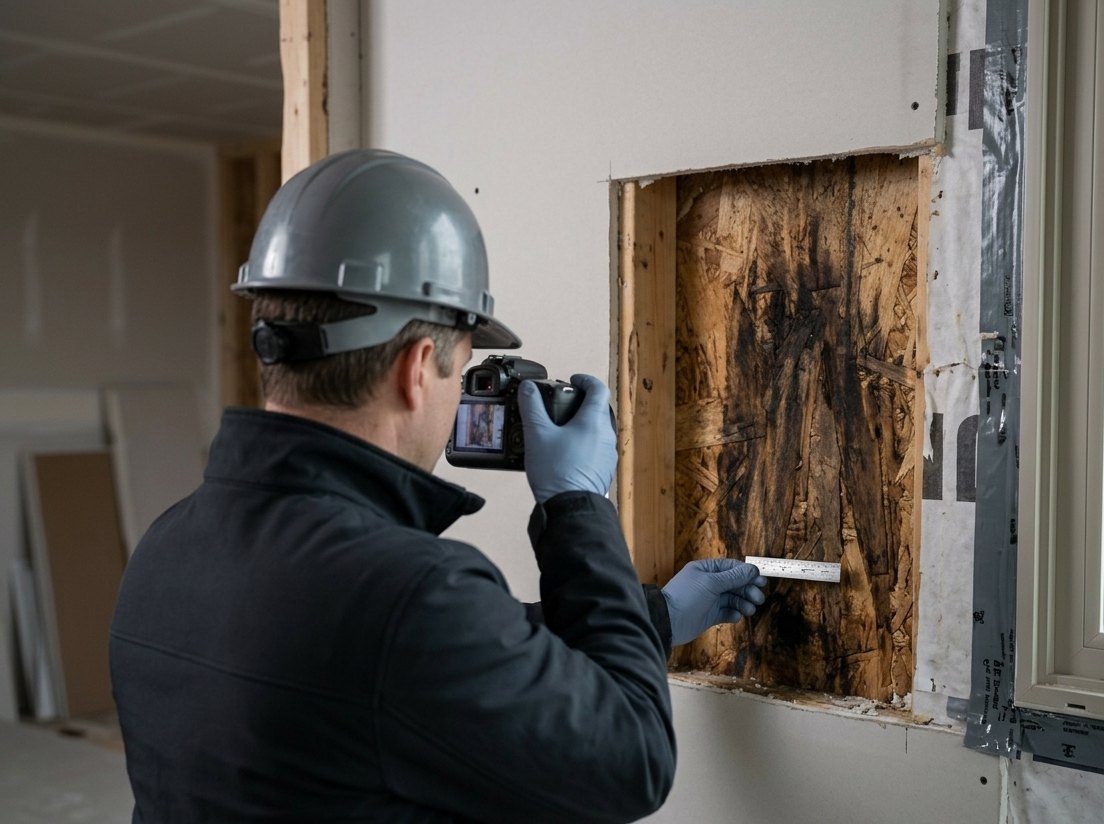
- Before destructive openings or demolition. Each opening should test a hypothesis. Random cuts waste money and evidence. The expert decides where to open and in what order, then documents each layer as it comes off: cladding, barrier, flashing, sheathing, framing. Removed components are labeled with location and orientation, bagged or crated and logged.
- Before other parties inspect. Your expert should know the building before the contractor, design team, subcontractors or other carriers arrive. That means a baseline set of photographs and readings and a written protocol for the joint inspection. The protocol covers who attends, who operates tools, what can be removed, how samples are split among the parties, how openings are numbered and how the shared photo log is kept. A party that arrives without its own consultant has little say in what gets measured.
- Before the claim or notice describes the defects. Whatever document first describes the problem to the other side should describe what the evidence shows at the locations where it shows it. An expert helps keep that description specific enough to be useful and narrow enough to be supported.
- Before testing. Testing takes planning. Water testing of windows or wall assemblies, pull tests, core samples, material analysis and laboratory work all depend on access, weather, equipment and lab schedules. The expert ties each test to a question it can answer and picks the recognized method before anyone mobilizes. Tests chosen after the fact to fit a conclusion are easy to take apart. See why ASTM standards matter in a forensic investigation.
- Before the project team scatters. Interviews with the superintendent, the envelope installer or the inspector of record are worth the most while those people still remember the job. We try to schedule them early. The useful questions are what changed from the drawings, what was substituted, what was installed out of sequence and what someone noticed but never wrote down.
- Before a report is due. Count back from the date. Inspection, testing, laboratory turnaround, record review and drafting each take weeks and several depend on the step before. An expert brought in against the due date ends up working around gaps in the record.
Where the Evidence Lives Besides the Building
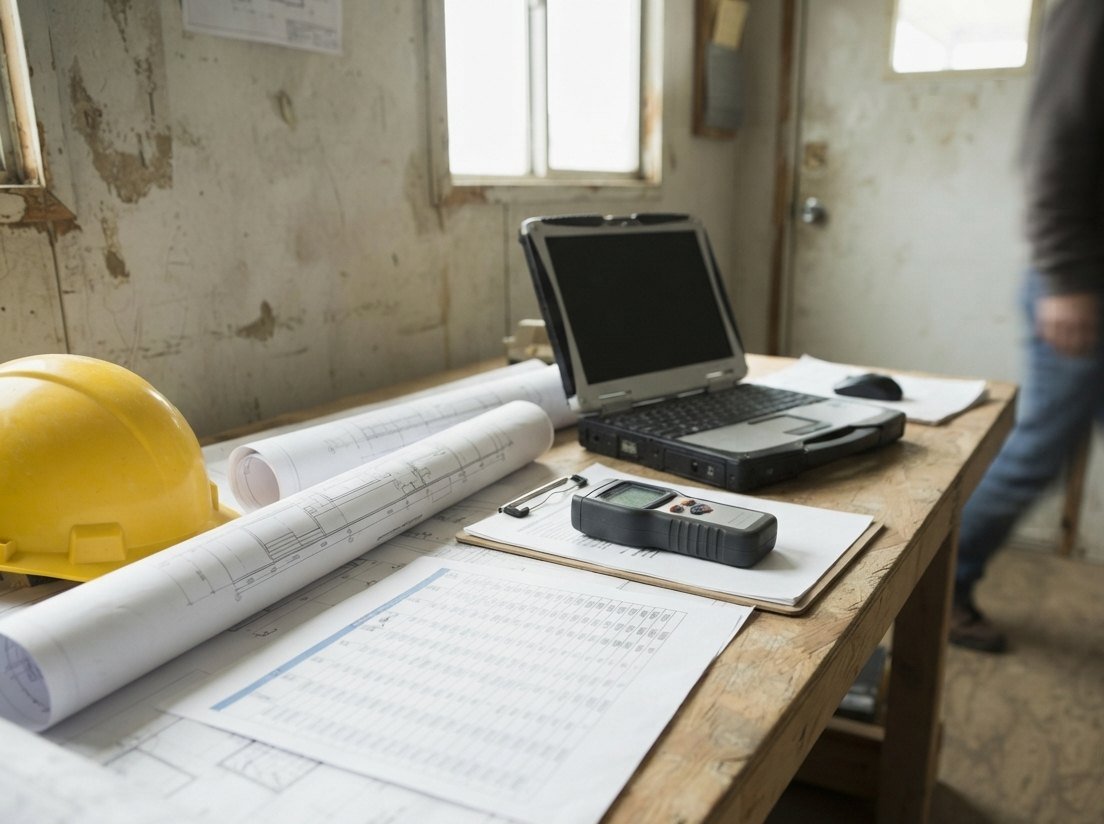
The physical evidence is half the file. The project record is the other half and it has its own shelf life. I spent years as a project manager and construction administrator working through RFIs, submittals, schedules and OAC meetings. I can tell you those records answer a lot of causation questions, provided someone collects them while the people who kept them still know where they are. An early expert helps name the documents that matter so the request is specific.
- Daily reports and superintendent logs. Weather, crew sizes, trades on site and the work in place on a given day. These tie a defect to a date and a trade.
- RFI and submittal logs. Where the design was questioned, clarified or changed and which product was actually approved.
- Change order logs and pay applications. What was added, deleted or substituted and when work was billed as complete.
- Native schedule files. Sequence and timing, including whether a trade covered work before it was inspected or before an adjacent trade finished. Native files carry logic that a PDF printout does not.
- Inspection cards, special inspection and test reports. What an inspector saw, signed off or flagged.
- Progress photographs with metadata. Date, time and sometimes location stamps. Phone photos taken by field staff are often the only images of concealed work. Collect them as original files. Screenshots and email attachments usually strip the metadata.
- O&M manuals and warranty letters. Maintenance obligations, product warranties and what the owner was told to do after turnover.
- Model and drawing files. As-builts, shop drawings and any BIM files.
- Post-loss records. Mitigation logs, moisture readings, restoration invoices and scope sheets. When the expert arrives late these are often the best evidence left, so keep them complete.
What Is Lost When the Expert Comes In Late
Evidence Repaired Away
Once the failed components are gone, the expert works from whatever someone else happened to record. A restoration photo shows a wet wall. It rarely shows the flashing lap, the fastener pattern or the sealant bond at the scale needed to say why the wall got wet. Causation becomes an inference and the opinion has to say so.
Missed Joint Inspections
Joint inspections are often scheduled early and on short notice. A party without a consultant attends with nobody who knows what to measure, what to ask for or which openings the other side is avoiding. Samples get split without a record of where they came from and the photo log belongs to someone else. Those gaps are hard to close later, because the openings are usually repaired after the inspection.
Compressed Testing
On a compressed schedule, the testing that gets done tends to be whatever could be arranged. That is not always the testing the question required. Weather windows for water testing, lab queues and equipment availability do not move for a report date. A late expert may have to rely on a smaller sample, a single round of tests or a method chosen for speed. Each of those becomes a stated limit on the opinion.
Compressed Record Review
Reading daily reports, submittal logs and schedule updates against the physical evidence is slow work. It is also how the expert finds the date a detail changed or the week a trade covered wet sheathing. Handed the file a few weeks before a report is due, the expert can only sample the record.
Fewer Qualified Choices
On a large project, the qualified consultants in a region may already be engaged by another party or carrier. Whoever calls first has the widest choice. See what to expect from a conflict check.
What a Late Expert Can Still Do
A late expert is still useful. They can read the project record, analyze whatever photographs and readings exist and inspect areas that were never repaired. They can look for the same detail at comparable locations elsewhere on the building and review whether the repair work addressed the cause. The difference shows up in the qualifiers. An opinion built on the assembly as it was found can be stated with more confidence than one built on someone else’s restoration photos. The second kind also has to explain the gap.
Outside Deadlines, in Brief
The building sets most of the schedule, but not all of it. Some states have prelitigation notice statutes for construction defects that give the contractor a chance to inspect after receiving notice.
In California, for new homes covered by the Right to Repair Act, a builder that elects to inspect must complete the initial inspection and testing within 14 days after acknowledging the claim. A second inspection is not automatic. If the builder finds one reasonably necessary and states why in writing within three days after the first, it must be completed within 40 days of the initial inspection. On request, the claimant or the claimant’s legal representative may observe, electronically record, video record or photograph the inspections (Cal. Civ. Code §916).
Florida is another example. Under Chapter 558 a claimant serves a written notice of claim before filing suit and the recipient has 30 days after service to inspect (50 days for an association representing more than 20 parcels). The statute also provides for exchanging documents on written request, including photographs, videos and expert reports that describe the claimed defects (Fla. Stat. §558.004).
Some states also require a licensed professional’s affidavit to be filed with certain claims against design professionals. Texas does so for architects and engineers (Tex. Civ. Prac. & Rem. Code §150.002). Limitations and repose periods set an outside date too. The expert’s first job is often to establish when a condition was visible or reported. See patent versus latent defects.
In federal court a party may request entry onto property to inspect, measure, test or sample (Fed. R. Civ. P. 34(a)(2)) and a retained expert’s report must state every opinion with its basis and the facts or data considered (Fed. R. Civ. P. 26(a)(2)(B)). Whatever the forum, the inspection and the data have to exist before a report can rest on them.
These rules vary by state, by project type and by contract. Counsel decides which apply and when. The expert’s job is to have the building documented before any of those clocks run out.
Early Without a Plan Has Its Own Cost
Retaining an expert early does not mean giving them an open checkbook. An open-ended mandate at first notice can spend the budget on issues that settle or on trades that turn out not to matter.
I have managed capital projects from the owner’s side, including as project manager on university capital projects. Nobody running a capital program releases the whole budget on day one without a defined scope. An expert engagement should be phased the same way:
- Preservation and scoping. A site visit, baseline documentation, a list of what to keep and a short memo naming the likely failure mechanisms and the information needed to test them.
- Decision point. With the scoping memo in hand, the client decides which issues warrant investigation.
- Investigation sized to the issues that remain. Destructive openings, testing and record review focused on those questions.
- Opinions and cost. Causation, scope of repair and cost of repair, built on the investigation and not ahead of it.
Many teams start the first expert as a consultant because early views rest on incomplete facts. Whether and when that consultant becomes a testifying expert is counsel’s decision. On the field side, keep notes, readings and photo logs clean and dated from day one so the file holds up whichever way that decision goes. See testifying versus consulting experts and construction expert witness fees and retainers.
A Decision Checklist for the First Days
- Is anything about to be repaired, demolished or discarded? Bring in the expert now, at least for preservation.
- Is anyone else going to inspect? Get the building documented and a protocol written before the other side arrives.
- Has the project record been gathered? If not, the expert should help list it, including native files and original photos.
- Are testing and laboratory work likely? Plan them early. Access, weather and lab schedules set their own pace.
- Is there a date the work product has to be ready? Ask counsel, then count back through inspection, testing, review and drafting.
Questions to Ask a Prospective Expert at the First Call
- Conflicts. Have you worked for any party, carrier, design firm or major subcontractor on this project or with these entities?
- Discipline fit. Which parts of this problem need a separate specialist such as structural, geotechnical, envelope, scheduling or cost?
- Preservation. What should be saved now and how will you document it?
- Access and protocol. How would you run a joint inspection and how will samples be split and logged?
- Record. Which documents and native files do you need first?
- Phasing. What would a first phase deliver and what decision would it support?
- Availability. Can you be on site before repairs resume and meet the inspection and report dates?
What to Do With This
If you represent owners or claimants, call the expert before the restoration contractor’s scope becomes the repair. Ask for a written preservation plan, a baseline photo and moisture record and a list of project documents to request. Make sure whatever first describes the defects matches what the expert has actually seen.
If you represent contractors or design professionals, the first inspection opportunity is usually the best look anyone on your side will get. Send someone who can decide what to measure, which openings to ask for and what to ask the owner to keep. Gather your client’s own daily reports, submittals, photos and schedule files early, while the field team still remembers the job.
Carriers and coverage counsel face the same issue from a different angle. What failed, when it began and what damage resulted are construction questions and they are often settled or lost in the first weeks. Mitigation is when evidence most often disappears. Where another party may be responsible, a short forensic visit before permanent repairs is inexpensive protection. Ask early whether the mitigation record includes dated moisture readings and whether failed components were kept. Ask the restoration contractor to photograph with scale, log readings on a sketch and hold representative components until they are released.
My advice across all of these is the same. Bring in the expert at the earliest point where someone is about to make an irreversible decision about the building. On most construction losses that comes well before anyone has filed anything.
A Note on Sourcing
PCC is a construction forensics and construction management firm, not a law firm. The timing guidance here reflects how construction evidence behaves on real projects and how forensic investigations are run. The few statutes and rules mentioned are here only as context, checked against their published text as of September 2026. Rely on your counsel for whether and how any rule applies to a given project. When a file reaches the point where the building needs to be documented before it changes, that is the work of our construction forensics team.
This article is a general informational overview, not legal advice and does not create an attorney-client or expert-client relationship. Rules and case law change. Confirm current applicability with qualified counsel in the relevant jurisdiction before relying on anything described here.