
State Guides
No-Damages-for-Delay Clauses: Pricing the Risk and Building the Record
Where delay comes from on real projects, how to price delay exposure and the project record every delay claim depends on.
Read the article →Florida's framework changed substantially in the last few years: a shortened statute of repose, and a sweeping post-Surfside condominium safety regime with real deadlines and real liability exposure. Here's the statutory landscape that shapes how PCC approaches both forensic and construction management engagements in this state.
Florida Statute section 95.11(3)(c) governs both the limitations period and the repose period for construction defect claims, and Senate Bill 360 (signed April 13, 2023) meaningfully rewrote both the timeline and how it's calculated:
Before SB 360, courts regularly had to resolve exactly this kind of factual dispute: in Harrell v. Ryland Group, 277 So.3d 292 (Fla. 1st DCA 2019), the timing question turned on the date of the community's last certificate of occupancy rather than any individual homeowner's possession date. The 2023 amendment was written specifically to eliminate that category of dispute going forward by fixing the trigger to a document of public record.
Because the repose period is now two-fifths shorter than it was before 2023, confirming a project's exact certificate-of-occupancy date and doing the seven-year math correctly is one of the first things worth establishing on a Florida matter. Getting the trigger date wrong can mean the difference between a live claim and one that's already time-barred.
After the June 2021 collapse of Champlain Towers South in Surfside (98 deaths, later linked to deferred structural maintenance and underfunded reserves), the Florida Legislature enacted Senate Bill 4-D (2022), creating a statewide structural safety regime with real deadlines and real liability exposure, refined since by SB 154 (2023) and HB 913 (effective July 1, 2025):
For a forensic engagement, this framework creates a document trail that didn't exist before 2022: milestone inspection reports and SIRS studies are now routinely available records, and a building's compliance history with both requirements is often directly relevant to a structural defect or premises liability matter, not just a separate compliance question.
PCC's forensic review of Florida condominium and cooperative matters includes checking the building's actual milestone inspection and SIRS compliance history against the statutory schedule, since a gap in that record is often itself a material fact.
Florida regulates contractors statewide through the Department of Business and Professional Regulation (DBPR) and its Construction Industry Licensing Board (CILB), under Chapter 489 of the Florida Statutes.
Because a certified license carries statewide authority while a registered license doesn't, confirming which type of license a contractor actually held (and whether that scope covered the work performed) is a standard early step in PCC's Florida forensic intake, alongside a straightforward CILB license-status check.
Florida has no OSHA-approved State Plan, so construction site safety on Florida private-sector job sites falls under federal OSHA jurisdiction directly, enforced under 29 CFR Part 1926 (Construction Industry Standards). A forensic investigation touching an active Florida job site typically needs to account for federal OSHA requirements alongside local building codes, the Florida Building Code, and the standard of care in effect at the time of construction.
Confirms the exact certificate-of-occupancy trigger date and the correct seven-year repose calculation before assuming a matter's timeline.
Checks a condominium or cooperative building's actual inspection and reserve-study compliance history as part of forensic intake, not as an afterthought.
Confirms whether a contractor held a Certified or Registered license, and whether that scope actually covered the work in dispute.
Florida Statute §95.11(3)(c) sets a four-year statute of limitations for actions founded on the design, planning or construction of an improvement to real property, running from the earliest of the issuance of a temporary certificate of occupancy, certificate of occupancy, certificate of completion, or the date of abandonment if construction is not completed. A separate statute of repose bars claims after seven years from that same trigger date, regardless of discovery, since Senate Bill 360 shortened it from ten years effective April 13, 2023. These are general timeframes, not case-specific legal advice. Confirm applicability with counsel.
Enacted after the 2021 Champlain Towers South collapse, Florida Statute §553.899 requires condominium and cooperative buildings of three or more habitable stories to undergo a milestone structural inspection by a licensed engineer or architect at 30 years of age (25 years if within three miles of a coastline) and every 10 years afterward. A companion requirement under §718.112(2)(g), the Structural Integrity Reserve Study (SIRS), requires the same buildings to fund reserves for specific structural components on a 10-year study cycle.
The Florida Department of Business and Professional Regulation (DBPR), through its Construction Industry Licensing Board (CILB), issues two types of contractor licenses under Chapter 489 of the Florida Statutes: a Certified license, which is state-level and valid in every county without additional local approval, and a Registered license, which is issued locally and valid only in the jurisdiction that issued it.
Florida has no OSHA-approved State Plan, so federal OSHA (29 CFR Part 1926 for construction) has direct jurisdiction over private-sector job sites statewide. A forensic investigation touching an active Florida job site typically needs to account for federal OSHA requirements alongside local building codes and the standard of care in effect at the time of construction.
This page is a general informational overview, not legal advice and does not create an attorney-client or expert-client relationship. Statutes and case law summarized above are subject to change and to case-specific exceptions. Confirm current applicability with qualified Florida counsel before relying on any deadline or standard described here.
Written by the same team that works these matters. Each piece is checked against the primary statute or the controlling decision rather than a secondary summary.
Where delay comes from on real projects, how to price delay exposure and the project record every delay claim depends on.
Read the article →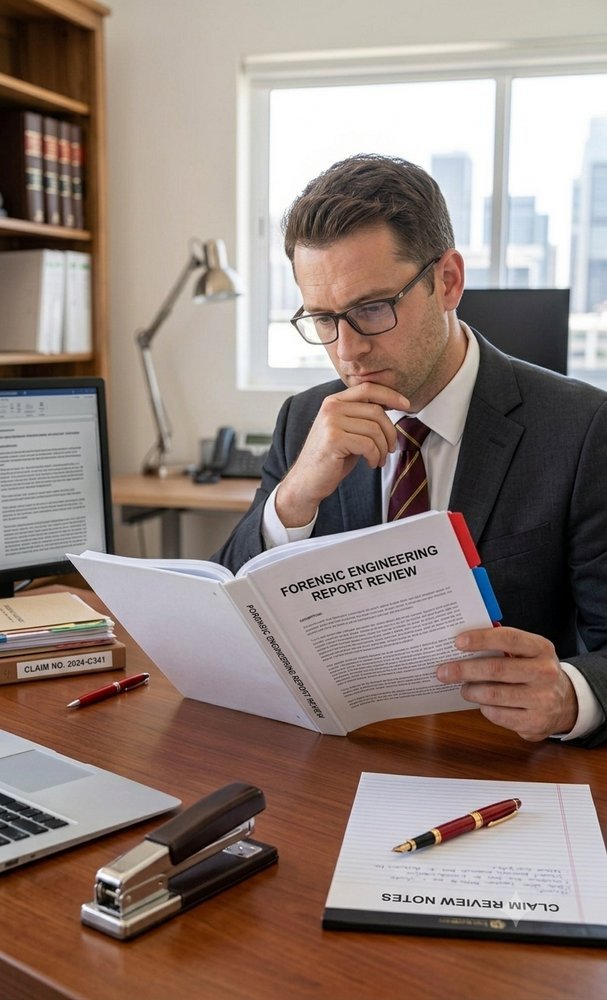
Five checks from the investigator's side: method, evidence, alternative causes, photos and the author's discipline.
Read the article →
Prior project involvement, financial relationships and professional history. What gets checked before any case facts are shared.
Read the article →All submissions are held in strict confidence and reviewed within one business day.