There's a real difference between "we think water is getting in somewhere near the window" and a documented finding produced under a named, repeatable test method. ASTM standards are what separates the two. They're also a big part of why a forensic opinion holds up under scrutiny instead of collapsing into a credibility contest.
ASTM International standards are voluntary consensus standards, developed by committees of practitioners across an industry and revised on a regular cycle. They aren't law. What they give a forensic opinion is a documented, repeatable basis that others can check: another consultant can read the same standard, run the same procedure and see whether the result holds. Whether a given standard bears on the standard of care in a particular dispute is a question for counsel.
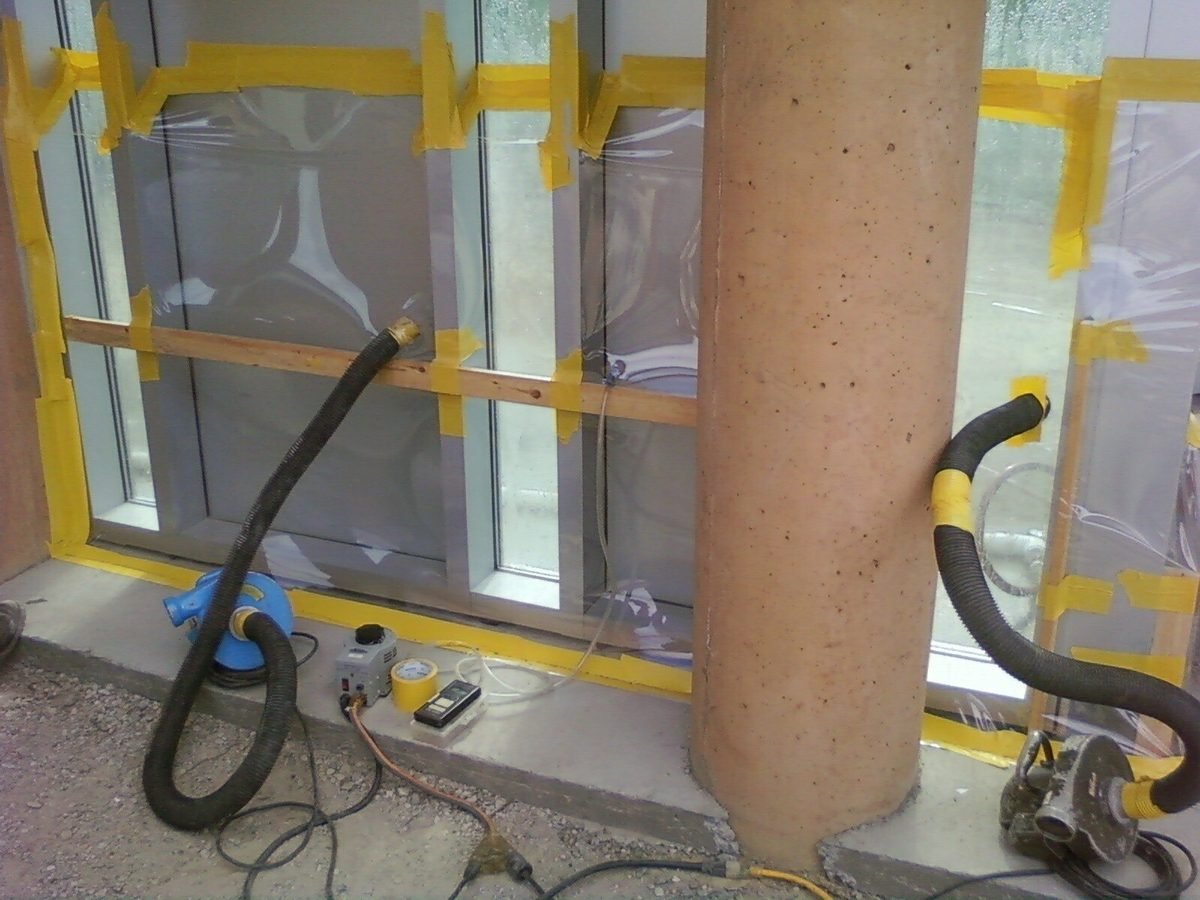
- ASTM E1105: Field water-penetration testing of installed windows, skylights, doors and curtain walls under a controlled static air-pressure difference. It shows whether that installed assembly resists water penetration under the test conditions. It does not by itself trace a leak elsewhere in the wall, which is why it sits inside a larger investigation.
- ASTM E2128: A standard guide for evaluating water leakage of building walls. It is not a test method with a fixed pass/fail result; investigators use it to organize the work of tracing an envelope leak path from symptom back to source.
- ASTM D5957: The standard guide for flood testing horizontal waterproofing installations, used to plan and document a flood test of a balcony, deck or similar horizontal surface to see whether the waterproofing actually holds water out.
- ASTM D4541 & D7234: Pull-off adhesion testing for coatings, on metal and other rigid substrates (D4541) and on concrete (D7234), used to verify whether a coating or waterproofing membrane is actually bonded to the substrate rather than failing underneath an intact-looking surface.
- ASTM D7391: A laboratory test method for categorizing and quantifying airborne fungal structures in an inertial impaction air sample by optical microscopy. It governs how the lab analyzes a sample that has already been collected. It is not a sampling method and it sets no pass/fail limit, so the result still has to be interpreted against the site conditions and comparison samples.
For attorneys and carriers, a standards-based test result is something an opposing expert has to argue against on its own terms, not dismiss as one consultant's opinion. For developers and homeowners, it's the difference between a contractor's assurance that a repair should hold and independent, documented confirmation that it does. Either way, the standard doesn't replace judgment. It gives the judgment somewhere real to stand.
PCC is a construction forensics and construction management firm, not a law firm. Readers should rely on counsel for how any standard or rule applies to their situation.
This article is a general informational overview, not legal or engineering advice and does not create an attorney-client or expert-client relationship.