
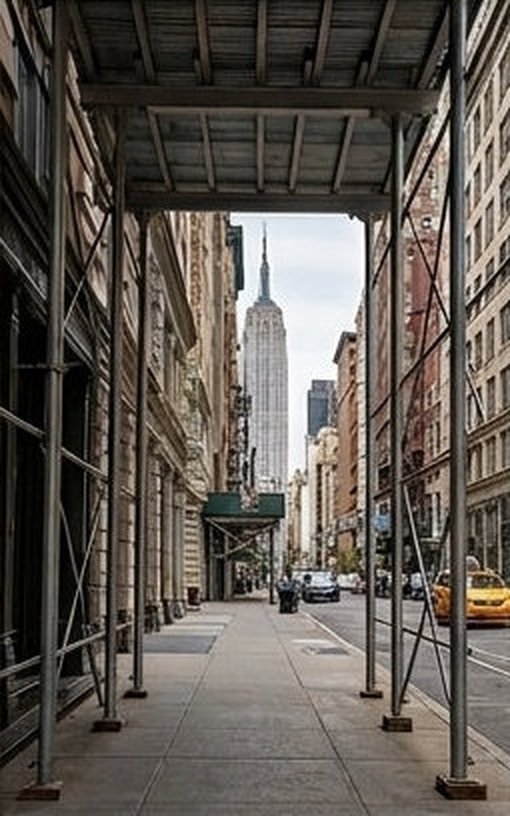
State Guides
Scaffold Law 101: The Jobsite Facts Behind a Labor Law 240(1) Incident
The jobsite facts behind an elevation-related incident and the records that show them.
Read the article →PCC provides forensic construction consulting and construction management for matters across New York State, including New York City. Here's the statutory framework that shapes how we approach both forensic and construction management engagements in this state: Labor Law §§200/240(1)/241(6), CPLR limitations periods, local contractor licensing and NYC's facade-safety program.
New York's limitations framework runs through the Civil Practice Law and Rules (CPLR) and, notably, does not include a general statute of repose for construction claims:
Because there's no hard outer cutoff, older New York matters can remain viable well beyond what a ten-year rule of thumb would suggest, but the CPLR §214-d notice requirement still needs to be checked and satisfied whenever a design professional is a target and the ten-year mark has passed. There is periodically legislative activity aimed at adding a true statute of repose in New York; confirm current status with counsel before assuming the framework described here hasn't changed.
The absence of a firm repose deadline doesn't reduce the value of an early forensic investigation; physical evidence and witness recollection still degrade on the same timeline regardless of what the statute allows.
Three overlapping Labor Law sections govern most New York construction-site injury and safety claims and are frequently pleaded together against different defendants:
Because §240(1) carries strict liability while §241(6) and §200 involve fault-based standards, a forensic scope of work on a New York site-safety matter usually needs to speak to which specific theory (or theories) are actually in play: the applicable standard of proof and the resulting defense posture changes meaningfully depending on which section governs.
PCC's forensic scope on New York site-safety matters is built around identifying which Labor Law theory the facts actually support, so findings are framed the way the case will be argued.
Everything above applies statewide, including in NYC. Inside the five boroughs, construction and forensic work also has to account for a denser local layer administered by the NYC Department of Buildings (DOB):
PCC treats NYC-specific requirements as an additional layer to check on top of the statewide framework, not a separate track. A matter located in Manhattan or Brooklyn is a New York matter first, with NYC Administrative Code and DOB requirements layered on where the facts call for them.
New York has no general statewide contractor license. Licensing is set locally, which makes "is this contractor licensed" a jurisdiction-specific question rather than a single statewide lookup:
Because there's no single statewide license record, confirming a contractor's licensing status in a New York matter means first identifying the correct local jurisdiction and then checking that jurisdiction's own system, a step PCC builds into intake on every New York matter rather than assuming a single statewide lookup applies.
PCC provides forensic construction consulting and construction management for attorneys, insurers, owners and boards across New York State, including New York City. The statutes above decide what a claim has to prove. Our work supplies the construction facts: what was built, what failed, why and when. See the full list of our construction forensics and construction management services.
Site investigation of leaks, cracking, settlement and failed assemblies, with testing to recognized ASTM methods where the question calls for it.
The construction facts behind a §240(1), §241(6) or §200 incident: the task, the device, its condition, who directed the work and the records that show it.
Review of facade conditions, FISP reports and repair scope when a Safe, SWARMP or Unsafe finding or a facade failure is in dispute.
Critical path analysis of when delays happened, what they moved and who controlled them, including work under no-damages-for-delay clauses.
Repair scope and cost estimates tied to the contract, the code and the project record, line by line.
Oversight of the repair or rebuild after a loss or settlement, so the work is done to scope, schedule and budget.
Findings framed against the specific §240(1)/§241(6)/§200 theory the facts support, since the standard of proof shifts meaningfully between them.
Comfortable working within NYC Administrative Code, DOB requirements and FISP obligations as an added layer on top of the statewide framework, not a separate process.
No assumption of a single statewide license database: the right local system (DCWP, DOB, or county) is identified before licensure status is confirmed.
Yes. PCC provides forensic construction consulting and construction management for matters across New York State, including New York City. The work includes building failure investigation, jobsite reconstruction for Labor Law incidents, facade condition review under FISP, schedule and delay analysis, repair scope and cost estimates and owner's representation during rebuilds. Every engagement starts with a conflict check.
Breach of contract claims are generally subject to a six-year period under CPLR §213. Claims for injury to property and most negligence claims are generally subject to a three-year period under CPLR §214. New York does not have a general statute of repose for construction claims; CPLR §214-d instead imposes a ninety-day pre-suit notice requirement on claims against design professionals filed more than ten years after substantial completion, which is a procedural notice rule, not an absolute time bar. These are general timeframes, not case-specific legal advice. Confirm applicability with counsel.
Labor Law §240(1), commonly called the Scaffold Law, imposes strict (absolute) liability on property owners and general contractors when a worker is injured by a gravity-related hazard, a fall from height or a falling object, on a covered construction, demolition, repair, alteration or cleaning project. It's frequently pleaded alongside Labor Law §241(6), which incorporates specific New York Industrial Code provisions and Labor Law §200, which codifies common-law negligence for site conditions.
No. New York does not issue a single statewide general contractor license. Licensing is handled locally: in New York City, contractors performing residential home improvement work generally need a Home Improvement Contractor (HIC) license from the Department of Consumer and Worker Protection, and certain trades are separately licensed by the NYC Department of Buildings. Nassau, Suffolk, Westchester and other counties run their own separate systems.
FISP, commonly known by its earlier name Local Law 11, requires owners of New York City buildings taller than six stories to have their exterior walls inspected every five years by a Department of Buildings-qualified inspector and to file the results with the DOB. It's administered under Article 302 of Title 28 of the NYC Administrative Code and can become directly relevant to construction forensics when a facade-related failure or repair dispute is at issue.
This page is a general informational overview, not legal advice and does not create an attorney-client or expert-client relationship. Statutes, program cycles and rules summarized above are subject to change. Confirm current applicability with qualified New York counsel before relying on any deadline or standard described here.
Written by the same team that works these matters. Each piece is checked against the primary statute or the controlling decision rather than a secondary summary.
The jobsite facts behind an elevation-related incident and the records that show them.
Read the article →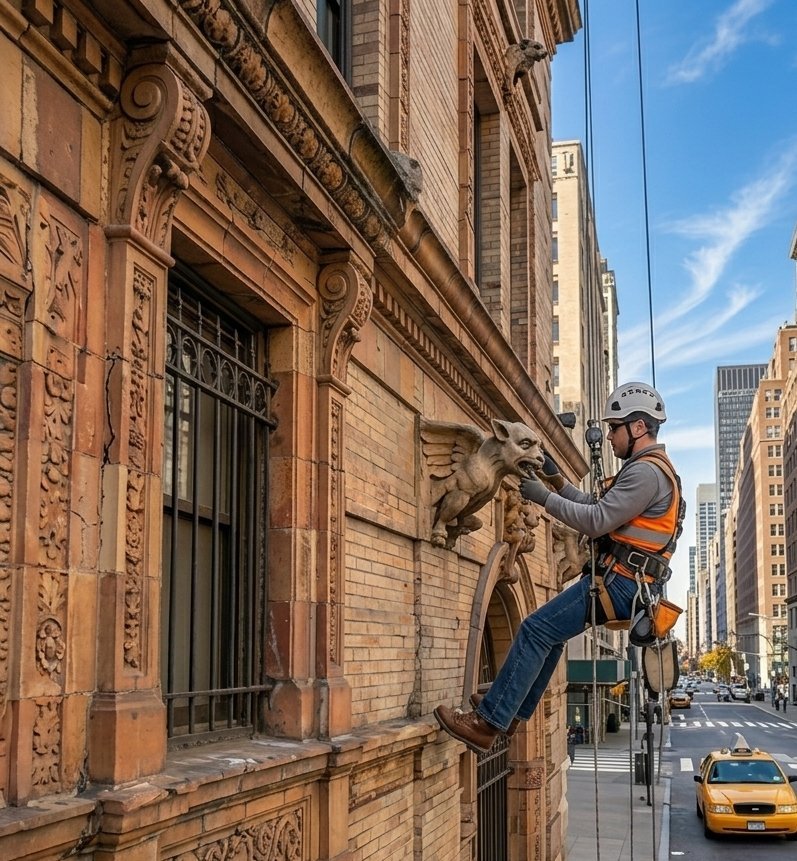
Local Law 11 by its current name. Cycle inspections, SWARMP conditions and what a filing commits an owner to.
Read the article →
Where delay comes from on real projects, how to price delay exposure and the project record every delay claim depends on.
Read the article →All submissions are held in strict confidence and reviewed within one business day.