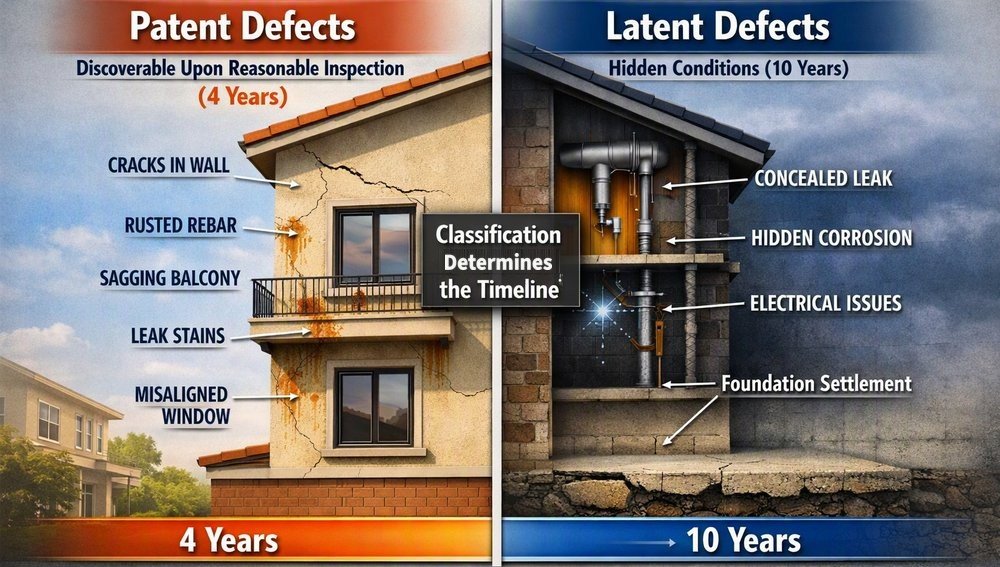
"Patent" and "latent" are legal labels, but the question behind them is a construction question: would a reasonable inspection have revealed this condition and if so, when? A patent defect is one a reasonable inspection would reveal. A latent defect is one it would not. Whether a given crack, stain or failed connection falls on one side or the other depends on physical facts: what was exposed, what was covered, who looked, what they were there to look at and what the record shows they saw. A forensic investigator can establish and document those facts. This article covers how.
Watch: Patent vs. Latent in 4 Minutes
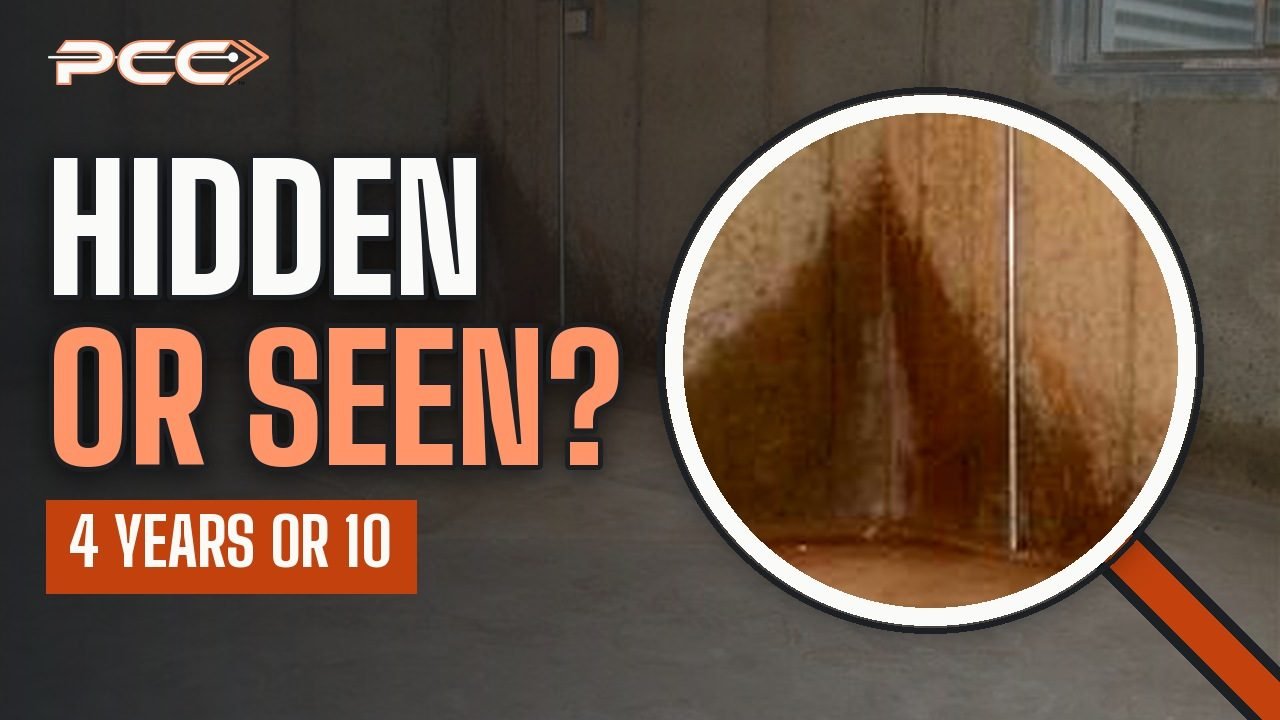
Captions are available in the player. The video loads from YouTube only when you press play. More videos on our YouTube channel
What a Reasonable Inspection Covers
A reasonable inspection is not a destructive investigation. It is a walk of the accessible areas by someone looking with ordinary care. In practice that usually means:
- Exposed surfaces: finished walls, ceilings, floors, exterior cladding and roofs that can be safely reached or seen.
- Accessible spaces: attics with a hatch and a walkable path, crawlspaces with an access opening, mechanical rooms and garages with open framing.
- Operable components: doors and windows that open and close, fixtures that run and drains that drain.
- Visible symptoms: staining, cracking, efflorescence, sagging, separation at joints, rust bleed and soft or uneven flooring.
It generally does not include removing finishes, cutting inspection openings, water testing or taking equipment apart. A condition that could only be found by doing those things points toward latent. A condition sitting in plain view in an accessible space points toward patent. Most real disputes sit somewhere between the two.
Finishes Conceal Most of the Work That Fails
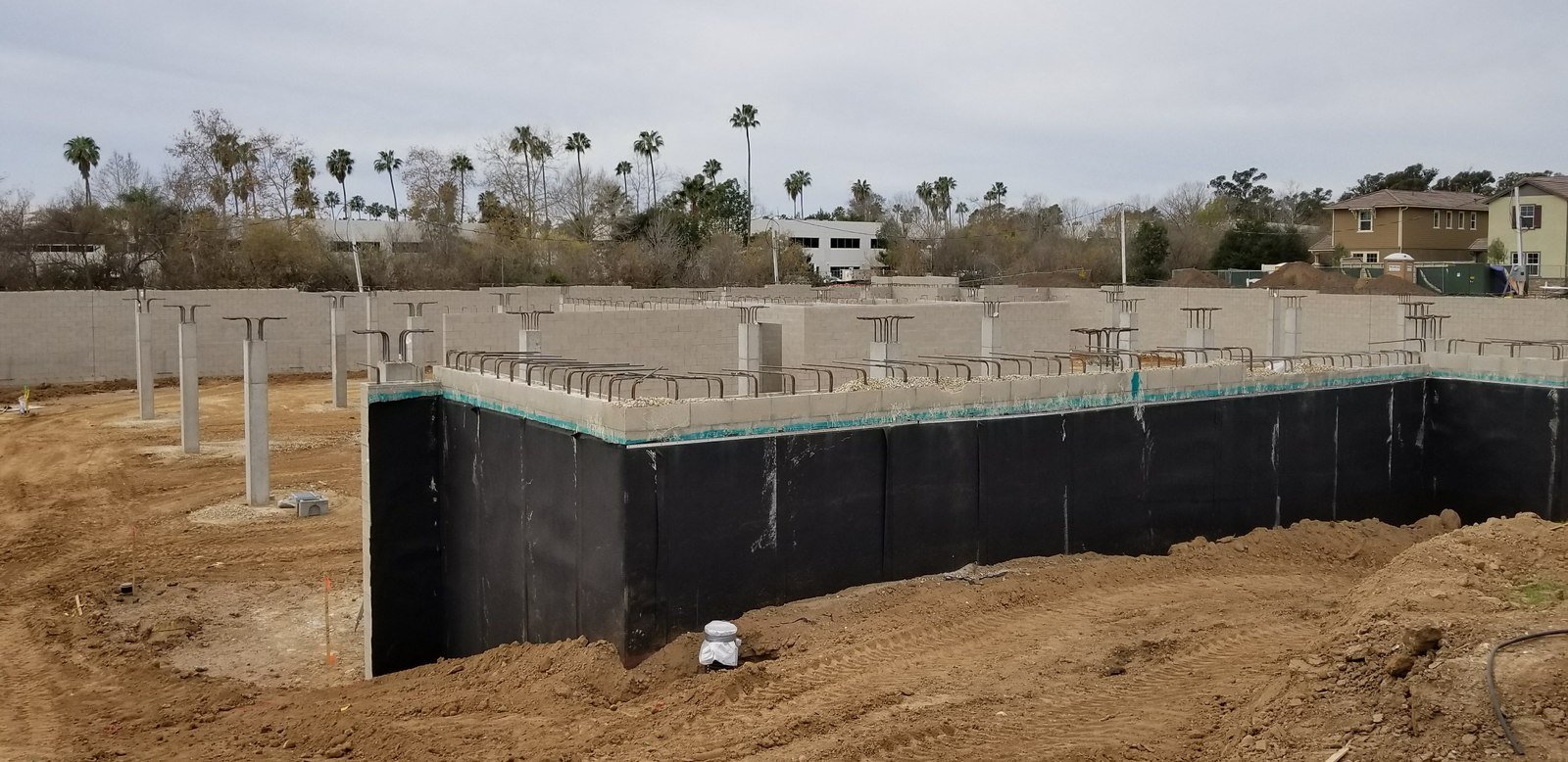
Most of what goes wrong in a building is covered before anyone other than the trades sees it. Window and door flashing sits under cladding. Deck and balcony waterproofing sits under topping slabs and tile. Shear wall nailing, hold-downs and framing connections sit behind drywall. Below-grade waterproofing is backfilled. Plumbing and duct runs are enclosed in walls and soffits.
That is why the same defect can stay latent for years and then become patent. A missing kickout flashing is invisible from the finished exterior. Once water has run behind the stucco long enough to stain interior drywall or rot a sill plate, a symptom appears in a place an ordinary inspection covers. The investigator's first job is to separate the underlying defect from the symptom. The second is to establish when the symptom first became observable and to whom.
How an Investigator Documents Observability
Observability has to be shown with evidence, not asserted. The work usually runs in this order:
- Reconstruct the condition at turnover. Turnover photos, final inspection records, punch lists, the occupancy date and any walkthrough sign-offs show what the building looked like when it was handed over. Progress photos taken before cover-up are often the most valuable record in the file because they show the concealed work before finishes went on.
- Map access. For each defect location, record how it could be reached: through a hatch, from a ladder, from a balcony, only with scaffolding or only by removing finishes. Measure and photograph the access points. An attic defect three feet from the hatch is a different finding from the same defect buried under insulation at the eave.
- Separate defect from symptom. Open the assembly where needed under an agreed testing protocol and trace the path from the visible symptom back to the cause. Record what was visible on the surface before opening and what was found behind it.
- Date the symptom. Maintenance logs, work orders, owner and tenant complaints, prior inspection reports, insurance claims and board minutes can show when staining, cracking or leaks were first reported. Paint over a stain, patched drywall and old repair materials inside the wall are physical evidence of earlier awareness.
- Compare against what earlier inspections covered. If a prior inspection report exists, read its scope. An inspector who did not enter the crawlspace did not look at the crawlspace. An inspector who noted "minor staining" at a ceiling did see something. The report's scope and photos define what that inspection could have revealed.
What the File Should Contain
The deliverable is a record another professional can follow without having been on site:
- Photographs of each defect location as found, before any opening, with the access route shown.
- Photographs during and after opening, keyed to a location plan.
- A description of what an ordinary inspection of that area would and would not have shown, with the reasons (access, finishes, lighting, height, stored contents).
- The earliest dated record of a visible symptom found in the documents, with its source.
- The construction records that show when the work was covered: progress photos, inspection cards and daily reports.
Where records are thin, the report should say so. A gap in turnover documentation is itself a finding. It is better stated plainly than filled with assumption.
CCP 337.1 and 337.15: The Four-Year and Ten-Year Limits
The classification matters because California sets a different outer time limit for each category. Both limits run from substantial completion of the improvement, not from the day the problem was found. Here is what the two sections of the Code of Civil Procedure say, in plain terms. Counsel decides which periods apply to a given claim.
- Patent deficiencies, CCP §337.1: no action more than four years after substantial completion. The statute defines a patent deficiency as one “apparent by reasonable inspection.” If an injury caused by a patent deficiency occurs during the fourth year, a tort action for that injury may be brought within one year after it occurred, but never more than five years after substantial completion. The four-year and five-year limits do not apply to an owner-occupied single-unit residence.
- Latent deficiencies, CCP §337.15: no action more than ten years after substantial completion. A latent deficiency is one “not apparent by reasonable inspection.” The section does not apply to actions based on willful misconduct or fraudulent concealment.
Neither section extends any other limitation period. Shorter periods that run from discovery can also apply, which is one more reason the date a symptom first became observable matters. Patent versus latent also does not decide whether California's Right to Repair Act applies. That turns on the type of property and the sale date: the Act applies to new residential units where the seller signed the purchase agreement on or after January 1, 2003 (Civil Code §938). The full text of both sections is on the California Legislative Information site.
Where the Completion Date Comes From
Both clocks start at substantial completion, so the completion date is a construction fact worth pinning down early. Section 337.15 is specific about it. The ten-year period starts at substantial completion but no later than the earliest of these four events:
- The final inspection by the applicable public agency.
- The recording of a valid notice of completion.
- The use or occupation of the improvement.
- One year after work on the improvement stopped or was terminated.
The section also ties substantial completion to the work of each profession or trade, so the framer, the roofer and the window installer can each have a different date. Every one of those dates lives in a record: the building department's inspection card and final sign-off, the notice of completion recorded with the county, occupancy and move-in records and the daily reports, pay applications and closeout documents that show when each trade finished.
When I managed projects on the construction side, those were routine closeout papers. In a defect dispute they become the evidence of when the clock started. We collect them along with the turnover file described above.
Patent versus latent comes down to what could be seen, by whom and when. That question is answered with access measurements, photographs, turnover records and the physical evidence inside the wall. Building that record early, before repairs cover the evidence again, makes it useful to everyone who relies on it later. For California background, see our California Construction Law Guide.
This article is general information and not legal advice. It does not create an attorney-client or expert-client relationship. PCC is a construction forensics and construction management firm, not a law firm. Rely on qualified counsel for how any rule described here applies to a specific property or claim. How defects are classified and what follows from the classification varies by state.