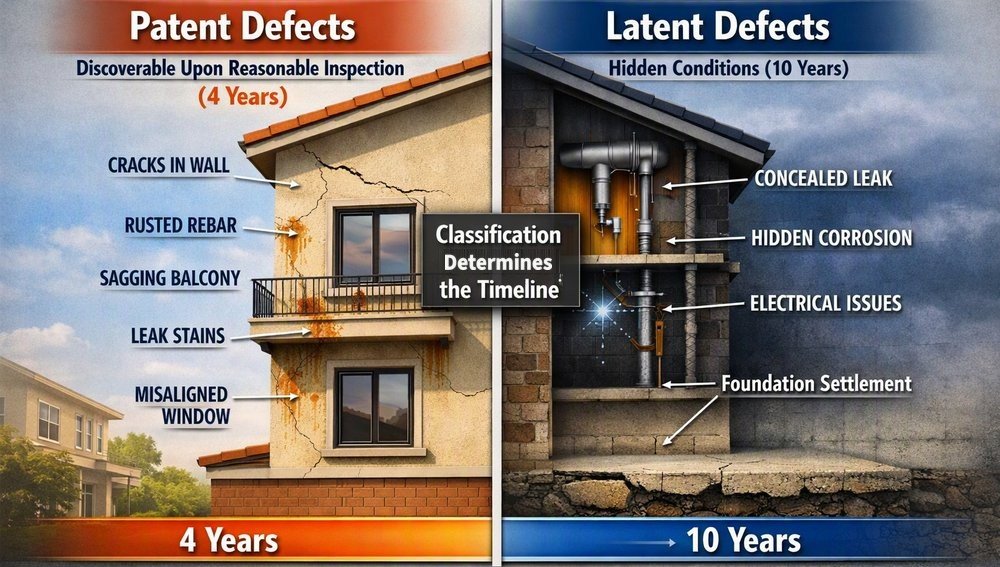
10 yrs
Outer limit (statute of repose) for latent defect claims: CCP §337.15
4 yrs
Outer limit for patent (apparent) defect claims: CCP §337.1
§896
Right to Repair Act construction standards, Civil Code
§7031
Business & Professions Code: unlicensed contractor disgorgement
Working California Matters

What California-specific experience looks like in practice

Right to Repair Fluency

Forensic findings structured to map onto the specific Civil Code §896 standards, so they translate directly into the pre-litigation notice process.

Licensing-Aware Damages Work

Contractor licensure status checked against CSLB records early, because it can change a damages analysis independent of construction quality.

Deadline-Conscious Intake

Patent/latent classification and applicable limitations period identified at intake, given how firmly California's statute of repose is enforced.

Frequently Asked

California Construction Law: Quick Answers

What is the statute of limitations for a construction defect claim in California?

It depends on whether the defect is patent or latent. Patent (apparent) defects are generally subject to a four-year outer limit under Code of Civil Procedure §337.1. Latent (hidden) defects are subject to a ten-year outer limit, a true statute of repose, under Code of Civil Procedure §337.15, running from substantial completion. Claims under the Right to Repair Act (Civil Code §941) are also generally subject to a ten-year outer limit. These are general timeframes, not case-specific legal advice. Confirm applicability with counsel.

What is California's Right to Repair Act?

The Right to Repair Act (Civil Code §895 et seq., also known as SB 800) sets construction performance standards for new residential units first sold after January 1, 2003 (Civil Code §896) and generally requires a non-adversarial pre-litigation notice-and-opportunity-to-repair process (Civil Code §§910–938) before a lawsuit can be filed. The California Supreme Court held in McMillin Albany LLC v. Superior Court (2018) that the Act provides the exclusive remedy for claims within its scope.

Does an unlicensed contractor affect a California construction claim?

It can substantially change the analysis. Business & Professions Code §7031 bars an unlicensed contractor from suing to collect compensation for work requiring a license and separately allows the party who paid an unlicensed contractor to sue to recover all compensation paid, regardless of whether the work itself was performed competently. Confirming licensure status through the CSLB is a standard early step in a forensic damages analysis.

What safety statutes come up in California construction litigation?

Cal/OSHA regulations (Title 8 of the California Code of Regulations, enforced by California's Division of Occupational Safety and Health) frequently intersect with premises liability and site-safety claims on active construction sites, alongside applicable local building codes and standard-of-care obligations in effect at the time of construction.

This page is a general informational overview, not legal advice and does not create an attorney-client or expert-client relationship. Statutes and case law summarized above are subject to change and to case-specific exceptions. Confirm current applicability with qualified California counsel before relying on any deadline or standard described here.

Ready When You Are

Have a California matter that needs a forensic read, or a rebuild that needs oversight?

All submissions are held in strict confidence and reviewed within one business day.