Before a California construction defect claim goes forward, someone has to answer a set of physical questions about the building. What is wrong with it? When was it built and when was the work complete? Could the problem have been seen on a reasonable inspection? Who did the work? Is the evidence still there to examine? The deadlines and procedures that apply all turn on those facts. The facts come from the building and the project record, not from the pleadings.
This checklist is written from PCC's side of the work: construction forensics and construction management. It covers what the investigation should establish and where the answers usually come from. The legal rules appear only as brief context near the end. Counsel decides how they apply to a given property.
1. What Is Physically Wrong
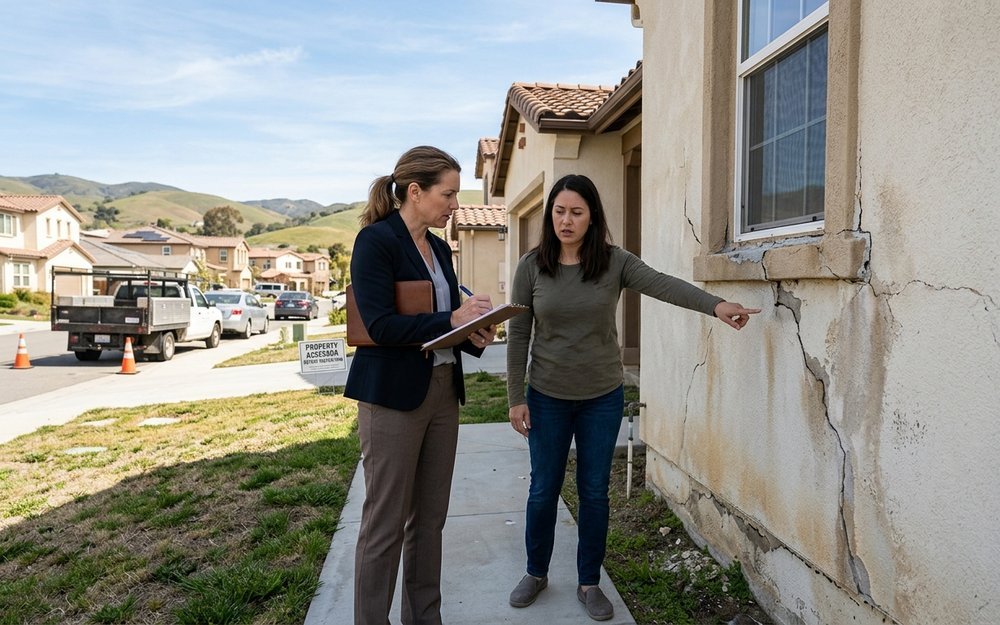
A complaint from an owner or a board usually describes a symptom: a stain on a ceiling, a crack in stucco, a door that binds, a soft spot in a deck. The symptom is where the investigation starts, not where it ends. The first job is to trace each symptom to a physical cause and tie that cause to a specific building component or installation.
- Document conditions as found, with photographs, measurements and locations keyed to the drawings.
- Separate construction defects from normal wear, deferred maintenance, later alterations and damage from outside events.
- Compare the installed work to the approved plans, the specifications, the manufacturer's installation instructions and the code the project was permitted under.
- Where the cause is hidden, plan targeted openings or water testing rather than broad demolition.
A clear statement of cause shapes everything that follows. It defines the repair scope, shows which trades are involved and frames the question of when the condition could first have been seen.
2. When It Was Built and Completed, From the Record
Completion dates are easy to assume and easy to get wrong. Owners remember move-in. Contractors remember final payment. The dates that matter are the ones the documents can prove, so the investigation should collect them early.
- Building permit history and the final inspection sign-off from the local building department.
- Any notice of completion recorded with the county recorder.
- Certificates of occupancy, move-in records, escrow closing dates and first sale documents.
- Daily logs, pay applications, punch lists and the last dates of work by each trade, including work that stopped without a formal close-out.
Build a timeline that shows each date next to its source document. Where the record conflicts, note the conflict instead of picking one date. As the legal context below explains, the outer limit for a latent defect claim can start from the earliest of several of these events. Counsel needs all of them, not only the one that seems most natural.
3. Whether It Was Observable on Reasonable Inspection
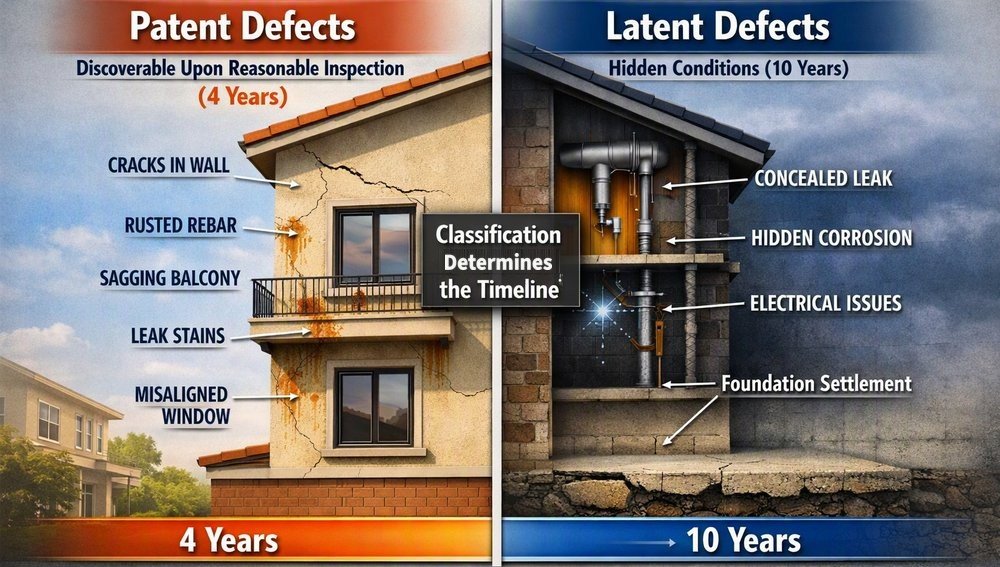
California treats a deficiency that was apparent on a reasonable inspection (patent) differently from one that was not (latent). The classification is a legal call, but the facts behind it are construction facts. The investigation should record:
- Where the condition is located and whether it could be seen without removing finishes or opening assemblies.
- What a reasonably careful inspection at completion would have covered for that type of building and component.
- Whether the condition was visible at completion or developed later from a concealed cause, such as water entering behind cladding and showing up years afterward.
- Photographs, inspection reports and punch lists from the time of completion that show what was and was not visible.
One building can have both kinds of conditions. A cracked slab edge at a garage may have been in plain view at turnover while a failed flashing detail at a window was sealed inside the wall. Report each condition separately.
4. Who Built It
Each condition has to be tied to the party that performed or supervised the work. On most projects that trail runs through a general contractor, several subcontractors, suppliers and sometimes design professionals whose details were built as drawn.
- Match each defect to the trade scope that covered it, using subcontracts, scopes of work, submittals and daily logs.
- Determine whether the work followed the design or departed from it. A condition built as drawn points to a design question. A condition built contrary to the drawings points to an installation question.
- Check each contractor's record on the Contractors State License Board's public license lookup and save a copy of what it shows. License status can carry legal consequences that counsel will evaluate.
- Identify later repair or alteration work by others so it is not charged to the original builder.
5. Preserving the Evidence
None of the first four items can be established if the evidence is gone. Buildings get repaired, sold, remediated or demolished. Emergency repairs are often necessary, but an undocumented repair can erase the only proof of how the original work was built.
- Photograph and measure conditions before any repair, including emergency work.
- Keep removed materials such as flashing, membrane, fasteners and sections of framing, labeled with location and date.
- Maintain a chain of custody log for anything taken off site.
- Where other parties are likely to be involved, give counsel the chance to arrange a joint inspection before destructive testing or repair.
- Secure the project documents: plans, specifications, submittals, correspondence, photographs and maintenance records.
A mistake our team has seen repeatedly over their careers is a well-meant repair that stops the leak and destroys the record of what caused it. A short documentation step before the repair contractor arrives usually costs far less than the dispute it prevents.
The Legal Context, Briefly
These are the rules the facts above feed into. Counsel determines which apply and how.
- Outer limits from completion. Code of Civil Procedure §337.1 sets an outer limit of four years after substantial completion for patent deficiencies. Section 337.15 sets an outer limit of ten years after substantial completion for latent deficiencies. Under §337.15(g), the ten-year period starts on substantial completion but no later than the first of these to occur: final inspection by the public agency; recordation of a valid notice of completion; use or occupation; one year after work terminated or ceased. Shorter limitation periods that run from discovery can also apply.
- Right to Repair Act. The Act (Civil Code §895 et seq.) applies only to new residential units where the purchase agreement with the buyer was signed by the seller on or after January 1, 2003 (Civil Code §938). Whether a defect is patent or latent does not decide whether the Act applies. Where it applies, the Act sets its own pre-litigation procedure, which counsel manages.
A claim built on assumed dates, a symptom instead of a cause or a repair that erased the evidence tends to come apart later. The five items above are the construction groundwork that lets counsel apply the rules on solid footing. For the underlying statutes in more depth, see our California Construction Law Guide.
This article is a general informational overview, not legal advice. It does not create an attorney-client or expert-client relationship. PCC is a construction forensics and construction management firm, not a law firm. Rely on qualified California counsel for how any rule, deadline or standard described here applies to a specific property or claim.