The House That Did Not Burn
The scenario below is a composite, not any one project.
A wildfire burns the next neighborhood over. The house two streets up is standing, with no char on the siding and no broken glass. The owners come back after the evacuation order lifts and the place smells like a campfire. There is a gray film on the window sills. A week later the HVAC kicks on and the odor comes back stronger. The first adjuster visit ends with a proposal to wipe down the hard surfaces, clean the carpets and change the furnace filter.
Nobody sampled anything or looked in the attic, the return plenum or the wall cavities. The family is in a rental on additional living expense and nobody can say when they can move back.
Since the January 2025 Eaton and Palisades fires, that file has repeated itself across Southern California. This article walks through testing, scoping, clearance and documentation from the construction side, then covers what California’s new Smoke Damage Recovery Act changes and when.
How Smoke Gets Into a Building
I spent years as a project manager and construction administrator walking buildings while the walls were still open. You learn how many paths air has through a finished house. Every one of them carries smoke when a fire is burning upwind.
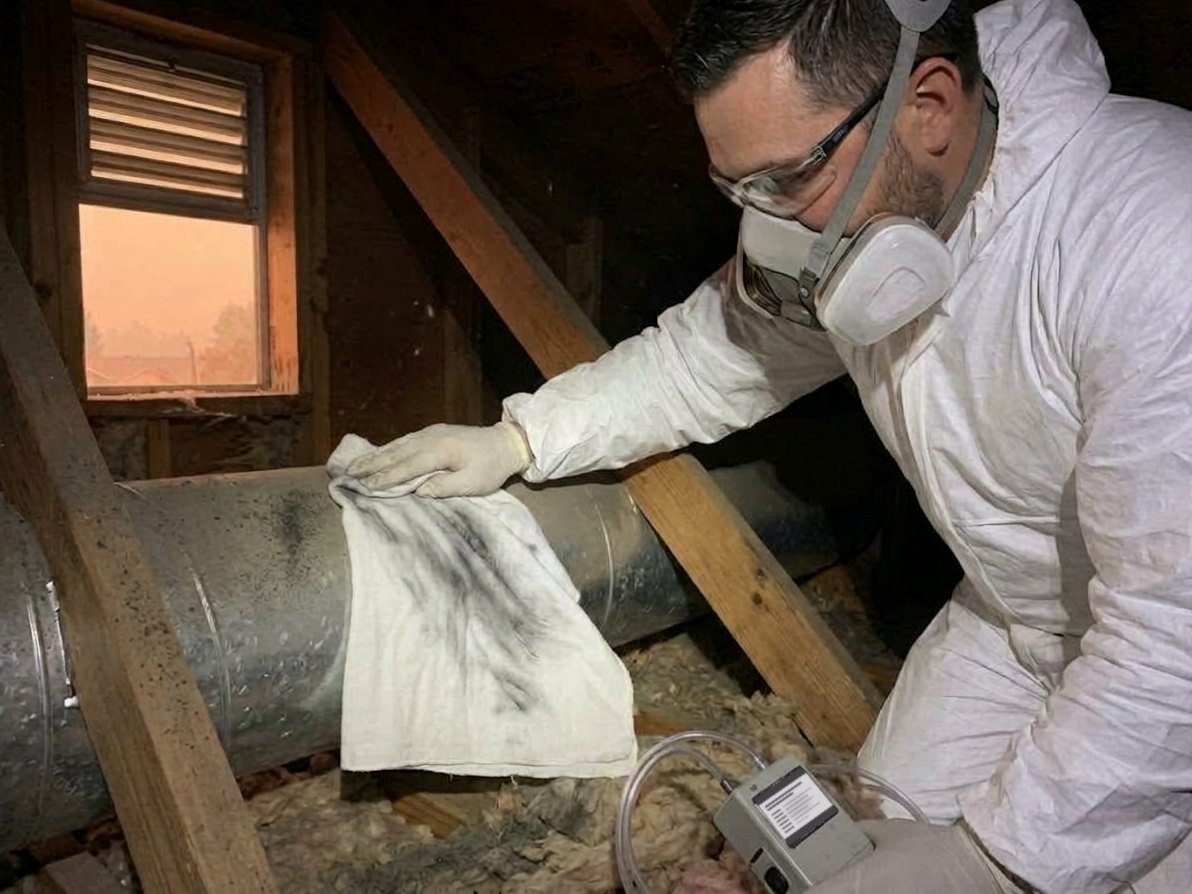
- HVAC systems. A system that ran during the fire or was switched on afterward pulls smoke and fine ash through the returns and spreads it to every room it serves. Residue collects in the return plenum, on the coil, in the blower and inside the duct runs. Flex duct and duct board are harder to evaluate and clean.
- Attics. Soffit, ridge and gable vents are designed to move outside air through the attic. During a fire they move smoke and ash onto the insulation and framing.
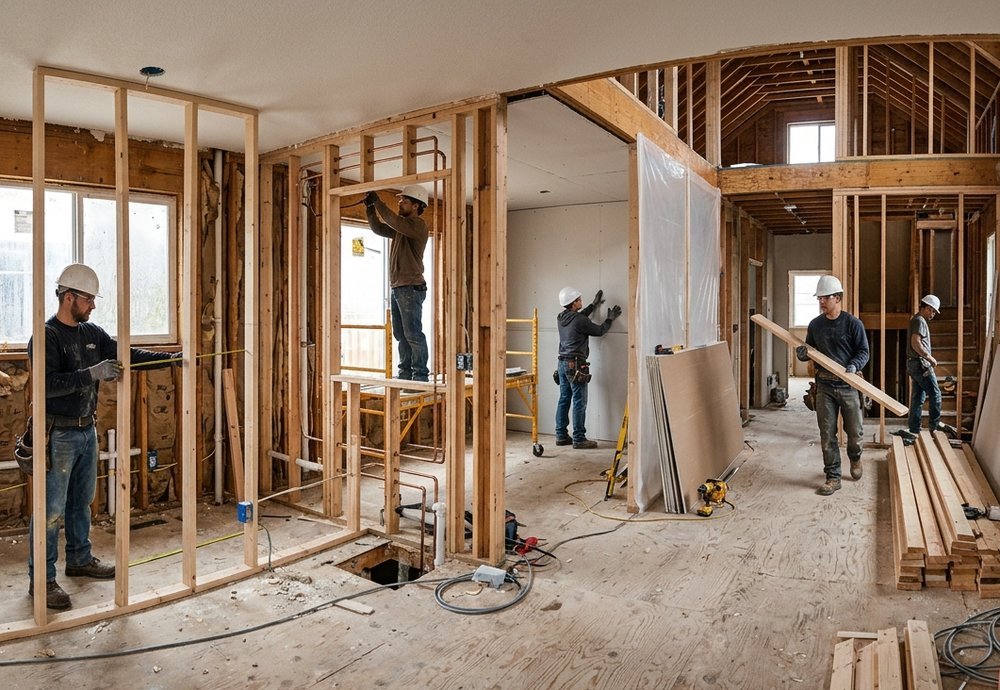
- Wall cavities. Outlets, switch boxes, plumbing penetrations and gaps at the sill plate all connect the living space to the stud bays. Residue can sit on the back of the drywall and in the insulation long after the room surfaces are cleaned.
- Porous finishes. Carpet and pad, upholstered furniture, drapes, unsealed wood, acoustic ceilings and flat paint absorb smoke.
Construction type matters too. An older, leaky house takes on more smoke than a tight newer one. In condo buildings, one unit’s investigation may depend on the common areas and shared ventilation.
Sampling and Testing Before Cleaning
When conditions permit, document and sample before cleaning changes the evidence. Once a crew has wiped, vacuumed and run air scrubbers, the record of what was there and where it was concentrated is gone. That record decides the scope and supports the claim. Do not delay urgent measures needed to protect occupants, stop active contamination or prevent further damage.
A reasonable sampling plan covers these areas:
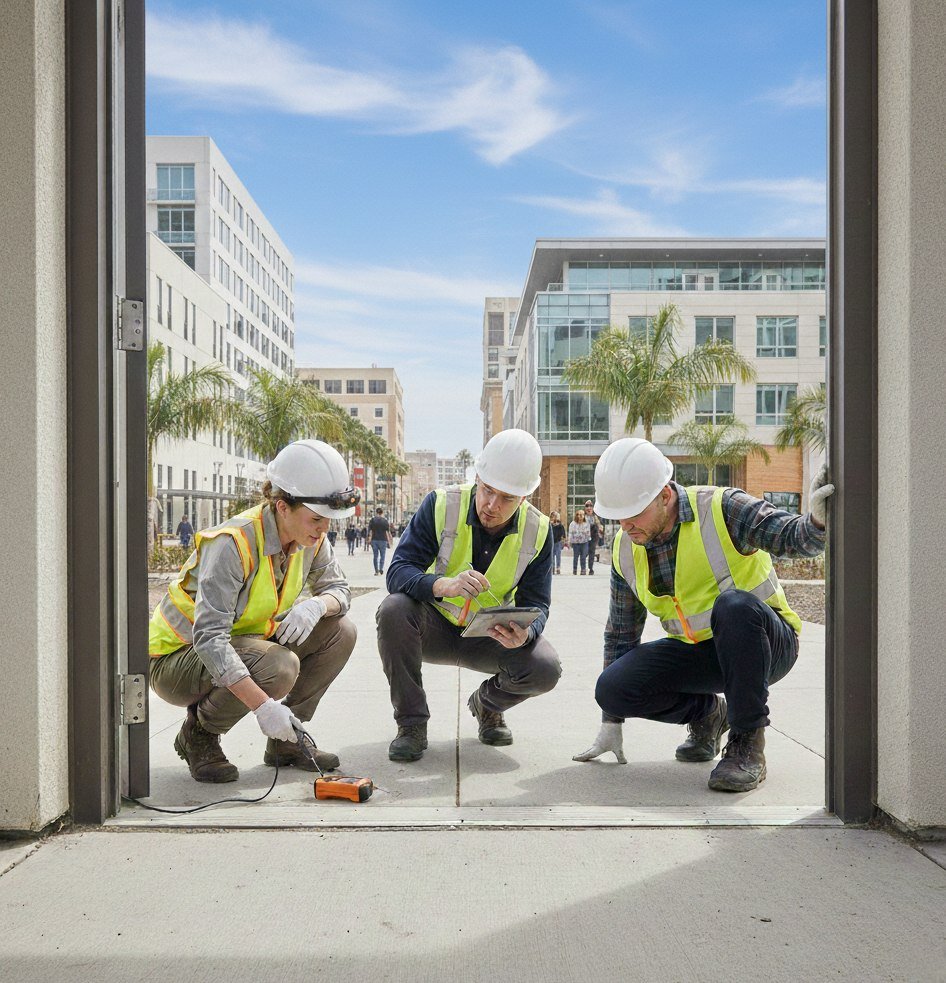
- Surface residue. Wipe and tape-lift samples from horizontal and vertical surfaces in each affected zone, with a control location away from the heaviest deposits. Laboratory analysis can identify char, ash and soot particles and separate wildfire residue from ordinary household dust.
- HVAC. Samples from the return plenum, supply registers, the coil area and inside representative duct runs. The results feed the decision on whether components are cleaned or replaced.
- Attic and cavities. Samples from insulation and framing in the attic and from inside selected wall cavities through small inspection openings.
- Hazardous materials. In older buildings, check painted surfaces for lead and suspect materials for asbestos before anyone sands, scrapes or removes them. Wildfire ash can also carry metals from burned structures, vehicles and equipment nearby.
Every sample needs a location on a floor plan, a photograph, a chain of custody and a lab report that says what method was used.
Our role is the building side: investigation, scope, cost and oversight. Interpreting industrial hygiene sampling and giving health advice belong to a qualified environmental professional. Coverage and legal questions belong to the carrier and counsel.
Scoping Restoration: Clean or Replace
Most smoke claim disputes land here. The carrier’s estimate cleans. The owner’s contractor replaces.
The industry reference for restoration practice is ANSI/IICRC S700, the Standard for Professional Fire and Smoke Damage Restoration, first published in 2025. It gives restorers a common framework, but the clean-or-replace call on a specific house still takes data from that house.
A scope that holds up gives a reason for each decision:
- Hard, nonporous surfaces. Glass, metal, sealed stone and tile can generally be cleaned, subject to post-cleaning results.
- Painted walls and ceilings. Often cleaned and sealed, then repainted. Flat paint and textured ceilings hold residue and odor more than gloss finishes do.
- Soft goods and flooring. Carpet, pad and upholstery may need replacement if professional cleaning does not meet the agreed criteria or if residue, odor or condition supports it.
- Insulation. Attic insulation with confirmed wildfire residue may warrant removal and replacement where cleaning cannot reliably meet the project’s documented criteria.
- HVAC. Sheet metal ducts may be cleanable. Flex duct and duct board are harder to evaluate and clean. Whether cleaning or replacement is right follows the inspection, the sampling, the manufacturer’s guidance and the restoration plan for the project.
- Wall cavities. Where cavity samples show residue, the scope has to address them.
Early in my forensic career I prepared repair cost estimates for construction defect cases. The rule I learned there applies here. Every line in the scope should trace back to a condition someone observed, measured or sampled. A line that says “replace all carpet” with no data behind it is easy to reject. So is a line that says “HEPA vacuum and wipe” for a room where the samples show heavy residue.
Clearance Testing
Clearance testing is the post-cleaning check that the work did what the scope said it would. Where appropriate, clearance testing uses comparable methods and repeats representative pre-cleaning locations so results can be compared by area and material.
There is no one uniform protocol. The check should use agreed, documented criteria suited to the property, its materials, the hazards present and the law or guidance that applies. A clearance round should repeat surface sampling in each zone that was cleaned, retest the HVAC after cleaning or replacement and include a visual and odor check by someone other than the crew that did the work. Lead and asbestos follow their own rules, covered below. If a location fails, it gets cleaned again and retested. The file should show both rounds.
California’s detailed technical guidance is still being developed, on the schedule described later in this article. Until it is in place, the qualified environmental professional should state the criteria, methods and basis for the particular property before work begins. Lead and asbestos follow the interim standards.
Documenting It for the Claim
The file should let someone who never saw the house understand what was there, what was done and what the results were.
- Conditions on first entry. Photographs of every room, the attic, the HVAC equipment and exterior vents before anything is moved or cleaned. Note odor by room and whether the HVAC ran during or after the fire.
- Sampling plan and results. A floor plan with every sample location, the lab reports with methods and the chain of custody.
- Scope with reasons. Each system and material group, the clean or replace decision and the result that supports it.
- Work records. Daily logs, crew and equipment, waste disposal records and photos during the work, including opened cavities.
- Clearance. Post-cleaning results against the stated criteria, including any failed locations and retests.
- Contents inventory. What was cleaned, what was replaced and why, with photos.
Under the new law described next, this record also carries the additional living expense timeline.
What the Smoke Damage Recovery Act Changes
AB 1795 (Gipson), the Smoke Damage Recovery Act, was approved by the Governor and chaptered on September 15, 2026 as Chapter 240, Statutes of 2026. It is not an urgency bill, so it takes effect January 1, 2027. Section 10 makes AB 1795 operative only if AB 1642 is enacted and takes effect on or before January 1, 2027. AB 1642 was chaptered the same day with a matching condition. Both were enacted in September 2026 and take effect January 1, 2027, with detailed regulations and guidance due in 2028 and 2029. Whether and how far any provision reaches a claim already open on the effective date or one from an earlier fire (including the January 2025 Eaton and Palisades fires) is a legal question for counsel. It turns on the policy, the loss date, the statutory text and the guidance. This reflects the enacted legislation as of September 2026.
The act adds new sections to the Insurance Code. The main points for the building side of a claim:
A Presumption That the Smoke Came From the Fire
New Insurance Code section 2060.1 creates a rebuttable presumption. If wildfire smoke, ash, soot, char or combustion byproducts are present in a surviving residential property in the wildfire impact zone after a wildfire, smoke damage in the property is presumed to result from that wildfire. The wildfire impact zone is a ZIP Code within or partially within the fire perimeter mapped by CAL FIRE. “Wildfire” includes a wildland-urban interface fire, an urban conflagration or a forest fire. Smoke from agricultural, industrial or commercial operations or routine residential activities unrelated to a covered wildfire is excluded.
Additional Living Expense Until Clearance
For a covered smoke damage claim in the impact zone, the insurer may not end additional living expense coverage until the property is restored to preloss condition and cleared for human occupancy, subject to policy limits. The act defines “restored to preloss condition” as removing smoke residues, ash, soot, char, combustion byproducts, chemicals, contaminants and odor from structural elements, building systems, contents and the indoor environment, excluding vegetation and soil, with no betterment. That definition reaches the attic, the cavities and the HVAC, not only the room surfaces.
Testing Costs, Inspection and Payment Timing
New section 2060.2 makes the insurer responsible for the cost of sampling and testing necessary to restore the property and clear it for occupancy, under the state regulations and guidance and subject to the policy terms. Other provisions:
- If the insurer inspects, it must do so as soon as practicable and no later than 30 calendar days after notice of the claim or 30 days after access is granted where government restrictions block access.
- Unless the policyholder agrees to have the insurer handle restoration, the insurer pays actual cash value of the undisputed cost to restore personal property within 30 days of inspection. Undisputed replacement cost for the dwelling is due within 30 days after restoration is completed. Personal property replacement cost is due within 30 days of receipt.
- Late payments accrue interest under Insurance Code section 2057.
- If the claim is settled on the insurer’s scope or estimate, the insurer must give the claimant a copy. That estimate must restore the property to no less than preloss condition and clearance.
- Vendors the insurer hires or refers must hold the state-mandated license, training and certification.
The legislative digest says a recontamination claim after clearance is treated as a new claim. That is one more reason to keep the clearance results in the file.
Training for Adjusters and Workers
The act directs the Department of Insurance to develop smoke damage training and certification for adjusters and public adjusters. Cal/OSHA’s Division of Occupational Safety and Health must propose worker protection and certification rules for work in smoke- or fire-damaged residences by July 1, 2029. The legislative findings refer to the Department of Insurance Smoke Claims and Remediation Task Force formed in June 2025 and to the lack of uniform standards.
The Standards Come Later
AB 1642 (Harabedian), the Wildfire Environmental Safety and Testing Act, is Chapter 239, Statutes of 2026. It adds Health and Safety Code sections 25402.1 to 25402.5 and sets the timeline for the technical standards the insurance provisions refer to:
- The Department of Toxic Substances Control, with the Office of Environmental Health Hazard Assessment, must adopt regulations on lead and asbestos testing, remediation and restoration after a wildfire by December 31, 2028.
- The State Air Resources Board must publish guidance on indoor air contaminants after residential wildfire smoke damage by December 31, 2028.
- DTSC and OEHHA must publish guidance with tiered screening levels for CAM 17 heavy metals, cyanide, lithium, manganese, dioxins and furans and polycyclic aromatic hydrocarbons by December 31, 2029.
Until those are in place, section 25402.3 fills the gap for two hazards. Lead dust clearance uses the federal dust-lead action levels in 40 CFR 745.227(e)(8)(viii). Asbestos is evaluated and remediated under Cal/OSHA’s asbestos standard at 8 CCR 1529 and the federal asbestos NESHAP at 40 CFR Part 61 Subpart M or by stricter standards.
So the law takes effect January 1, 2027, but most of the detailed guidance arrives in 2028 and 2029. In between, lead and asbestos follow the interim standards. For other contaminants, the qualified environmental professional should state the criteria, methods and basis for each property before work begins.
What to Do With This
Homeowners and condo boards should document and sample before cleaning changes the evidence when conditions permit, without holding up urgent steps to protect occupants or stop further damage. Keep the HVAC off until someone has looked at it. Ask for the sampling plan in writing and ask for a copy of any scope or estimate the claim is settled on. Condo boards should coordinate common-area testing with the unit owners so one report covers the shared systems.
For public adjusters and insurance adjusters, the early work matters most. Get a sampling plan in place that covers the attic, the cavities and the HVAC, not just the room surfaces. Agree on clearance criteria before work starts. Tie every clean or replace line to a result. When you review someone else’s scope, look for the sample locations, the lab methods and a documented clearance round. A scope without them will be hard to defend.
For counsel, the building record is what the presumption, the testing cost provision and the clearance requirement will run on. How the new sections apply to a particular loss and date is your call.
We read test results against the building, trace leak paths, write scopes that hold up and review scopes and estimates prepared by others. Where restoration turns into a larger rebuild, our owner’s representative work and our notes on post-settlement construction management may help. PCC works throughout California. If a smoke file needs a building-side review, contact PCC.
A Note on Sourcing
PCC is a construction forensics and construction management firm, not a law firm. Our role on smoke claims is the building side. The statutes described here are context for why that building work matters. Rely on your counsel for how any provision applies to a given claim.
AB 1795 and AB 1642 were checked against the chaptered bill text and status pages on the California Legislative Information site on September 28, 2026. The name and edition of ANSI/IICRC S700 were checked on the IICRC site. Descriptions of how smoke moves through buildings and how restoration is scoped are general construction practice stated qualitatively. The composite scenario is illustrative and not drawn from any single project. Current as of September 2026.
This article provides general construction and regulatory context, not legal, insurance-coverage or medical advice. Laws, agency programs, policies and procedures change and may apply differently to a particular property or claim. Consult your carrier, counsel and a qualified environmental professional before acting.