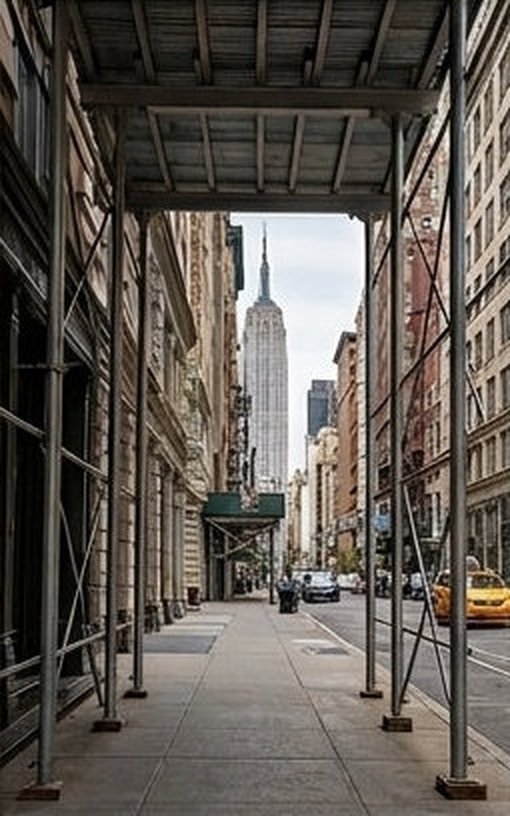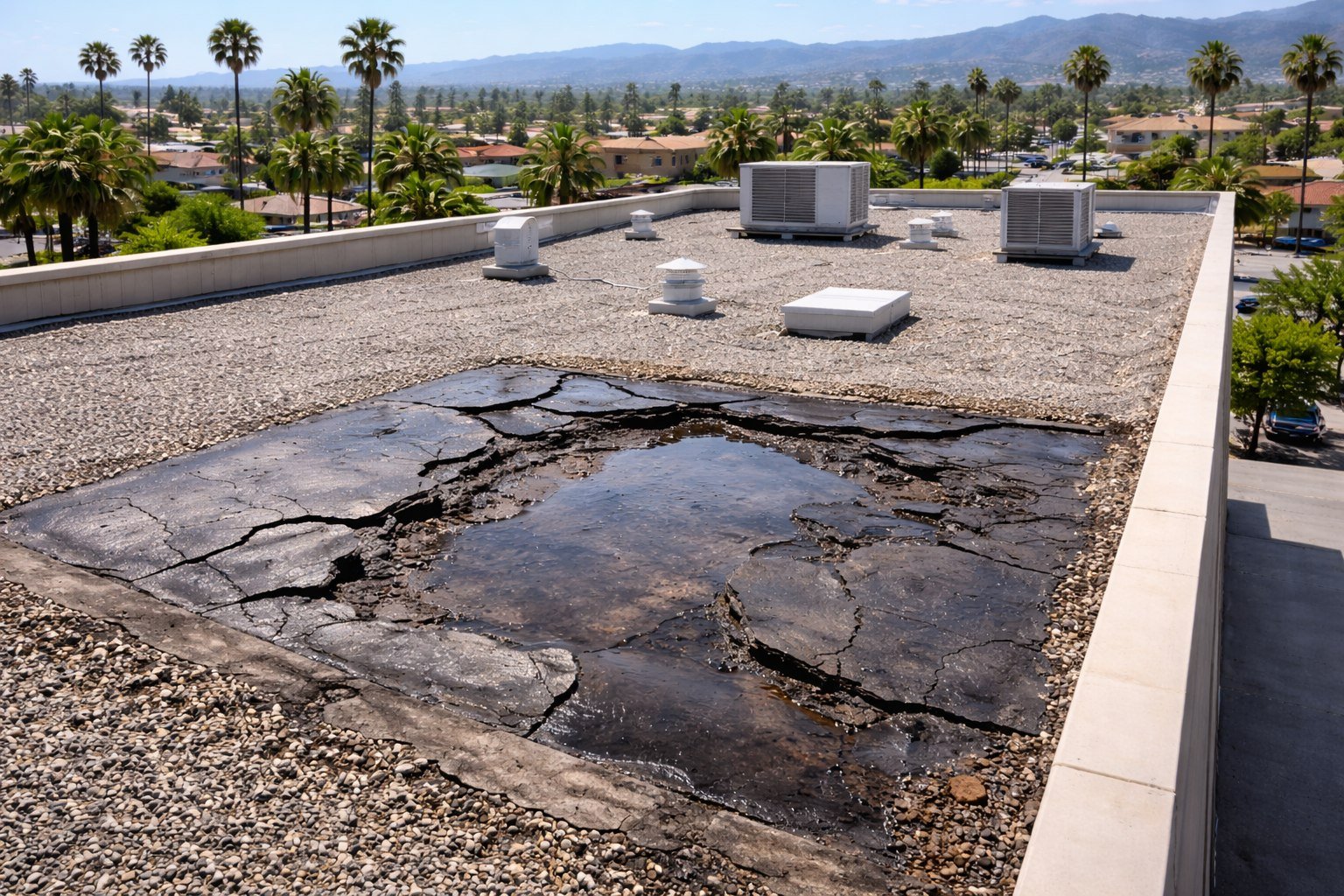

FISP (the Facade Inspection Safety Program, still widely known by its earlier name, Local Law 11) requires owners of New York City buildings taller than six stories to have their exterior walls examined every five years and to file the results with the Department of Buildings. Most owners treat the filing as the finish line. From a construction standpoint it is the starting point: the report is a condition survey of the building envelope. What an owner does with it over the next five years decides what the next inspector finds.
This article looks at FISP the way a construction consultant does. It covers what the inspection and report actually record, what the three classifications say about the physical condition of the wall and how to turn a report into a repair program that holds up at the next cycle.
The Program in Brief
The detailed requirements sit in the Department of Buildings rule, 1 RCNY §103-04. The points that drive scheduling and repair planning:
- Cycle 10 filing windows. Each building is assigned a sub-cycle by the last digit of its block number. Sub-cycle A (block numbers ending in 4, 5, 6 or 9) files between February 21, 2025 and February 21, 2027. Sub-cycle B (ending in 0, 7 or 8) files between February 21, 2026 and February 21, 2028. Sub-cycle C (ending in 1, 2 or 3) files between February 21, 2027 and February 21, 2029.
- Who inspects. The examination is performed by a Qualified Exterior Wall Inspector (QEWI), a New York State licensed architect or engineer with the experience the rule requires, hired by the owner.
- Close-up examination. On every facade that fronts a public right-of-way, the rule calls for close-up physical examinations at intervals of not more than 60 feet. It is not a survey from the sidewalk.
- Unsafe conditions have a clock. All unsafe conditions must be corrected within 90 days from submission of the report. Extensions are available.
What the Inspection and Report Actually Document
A FISP report is a record of observed conditions at a point in time. A good one tells the owner where each condition is, what it is, how serious it is and what the inspector expects to be done about it. The conditions that typically drive facade repair work include:
- Masonry distress. Cracked, bulging or displaced brick and stone, deteriorated mortar joints and loose units at cornices and parapets.
- Concrete spalls. Delaminated or spalled concrete at slab edges, balconies and columns, usually with corroding reinforcing steel behind it.
- Embedded steel. Rust jacking at steel lintels, shelf angles and spandrel beams, which shows up on the face of the wall as horizontal cracks and displaced masonry.
- Appurtenances. Railings, fire escapes, sign and antenna supports, air conditioner brackets and anything else attached to the wall that could fall.
- Openings and joints. Window frames, lintels, sealant joints and flashing, where water gets into the wall and starts most of the other problems.
- Prior repairs. Whether earlier patches, pinning and rebuilt sections are still performing.
The report locates conditions on the elevations, supports them with photographs and assigns each one a classification with a recommended repair. That location and photo record is the most useful part of the document for anyone pricing or managing the work. A vague report ("miscellaneous cracking, north elevation") forces the contractor to re-survey the wall before bidding, which costs time and money the owner has already paid once.
Safe, SWARMP and Unsafe as Condition Assessments
The classifications are regulatory categories, but each one is also a statement about the physical state of the wall and how much time the owner has before it changes.
- Safe. No conditions the inspector considers a hazard or expects to become one within the cycle. Routine maintenance still applies. Sealant and mortar keep aging whether the report says Safe or not.
- SWARMP (Safe With a Repair and Maintenance Program). The rule describes a condition that is safe at the time of inspection but requires repairs or maintenance during the next five years, though not less than one year. In construction terms these are active deterioration items: a crack that is not yet displacing masonry, early spalling, corrosion staining at a lintel. They are the cheapest point at which to fix the problem.
- Unsafe. A condition that is a present hazard to the public or the property. The owner must immediately start repairs and put up whatever public protection is required, such as a sidewalk shed, fence or safety netting. The unsafe conditions must be corrected within 90 days of the report.
One rule point matters more than any other for planning: the inspector must report conditions that were reported as SWARMP in the previous filing cycle as Unsafe if they are not corrected at the time of the current inspection. An untouched SWARMP item does not carry forward as SWARMP. It becomes an Unsafe condition in the next report, with the public protection and the 90-day clock that come with it.
What Owners Should Do With SWARMP Items
Treat the SWARMP list as a scope of work, not a note in a file. A practical sequence:
- Get a complete, located list. Every SWARMP item should be tied to an elevation, a drop or a bay and a photograph. If the report does not do this, ask the QEWI to supplement it before anything is bid.
- Find the cause, not only the symptom. Spalled concrete and cracked masonry are usually the result of water and corroding steel. A patch over an active corrosion problem will be back in the next report. Where the cause is not obvious, a targeted investigation (probes, openings at a lintel or shelf angle) is worth doing before the repair is designed.
- Write a repair scope with quantities. Estimated square footage of repointing, linear feet of sealant, number of lintels to replace. Quantities let contractors bid the same work and let the owner track what was actually done.
- Schedule inside the inspector's time frame. The QEWI sets a time frame for each item. Plan the work well ahead of the next filing window, since repair work often needs permits, approvals and good weather.
- Document completion. Close-out photographs of each repaired location, contractor records of materials used and a sign-off by the design professional. This is the record the next inspector will use to confirm the item was corrected.
- Carry the list into the next cycle. Hand the next QEWI the prior report and the completion records together. It shortens the inspection and avoids arguments about whether an item was addressed.
Planning the Repair Program
Facade repair is a construction project in its own right. The physical logistics usually drive cost more than the repairs themselves.
Access is the budget
Scaffold drops, pipe scaffolding, suspended platforms and sidewalk sheds are often a large share of the project cost. Grouping SWARMP repairs with any Unsafe work means paying for access once instead of two or three times. Where timing allows, the next inspection can share the same rig.
Phase by elevation and by risk
Where the budget does not allow the whole building at once, phase the work by elevation and put the items closest to becoming hazards first. Keep the phasing tied to the inspector's time frames so nothing slips past its deadline.
Match materials and details
Replacement brick, stone, mortar and patching material should be compatible with the existing wall in strength, color and movement. Mismatched mortar and rigid patches on soft masonry are a common reason prior repairs fail and reappear in the next report.
Manage the sidewalk shed
A shed that goes up for an Unsafe condition should come down as soon as the repair is complete and accepted. Sheds left standing for years are a cost to the owner and a nuisance to tenants and neighbors. A clear repair schedule is what gets the shed removed.
Where PCC Fits
PCC works on the construction side of FISP. On the construction management side that means turning a report into a priced, sequenced scope, coordinating the inspector with the contractor and access subcontractor. It also means tracking the work to documented completion. On the forensic side it means investigating why a facade condition developed and whether a prior repair was done to the standard the scope required. Our principals have seen over their careers how often a small SWARMP item left alone becomes a large Unsafe repair a cycle later.
For the broader New York framework FISP sits within, see our New York Construction Law Guide.
This article is a general informational overview, not legal advice. It does not create an attorney-client or expert-client relationship. PCC is a construction forensics and construction management firm, not a law firm. FISP filing windows, classifications and program rules are set by the NYC Department of Buildings and can change. Confirm current requirements with the Department of Buildings and rely on qualified New York counsel for how any rule applies to a specific building.