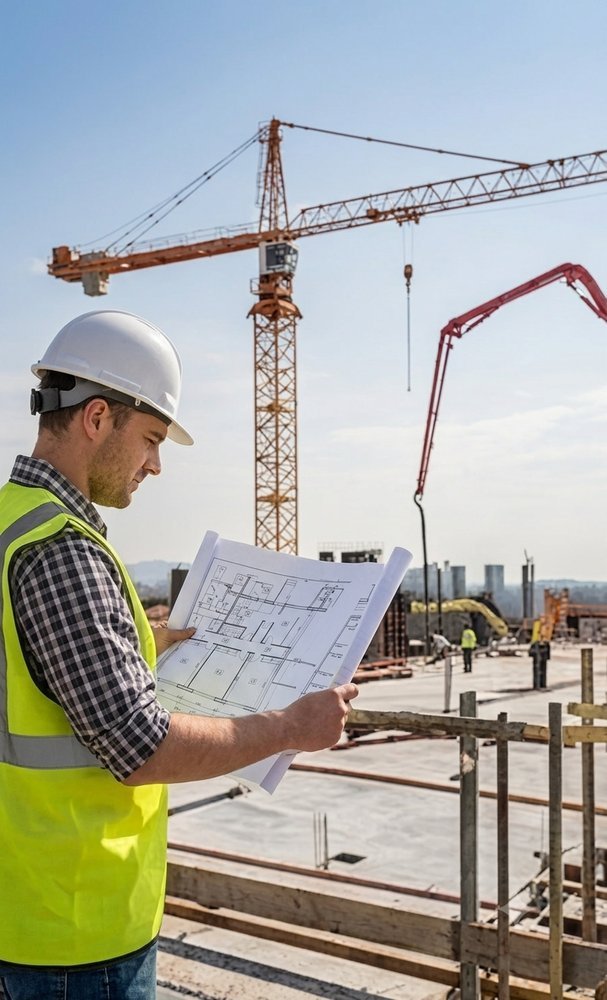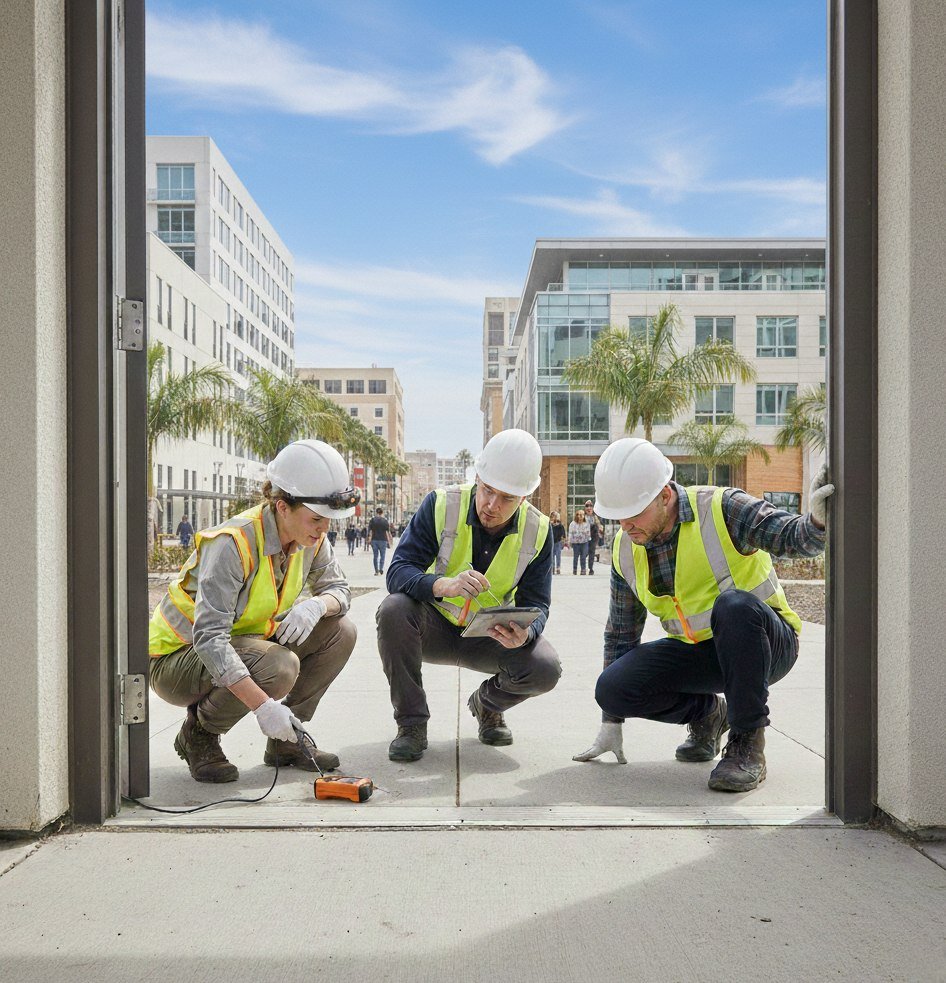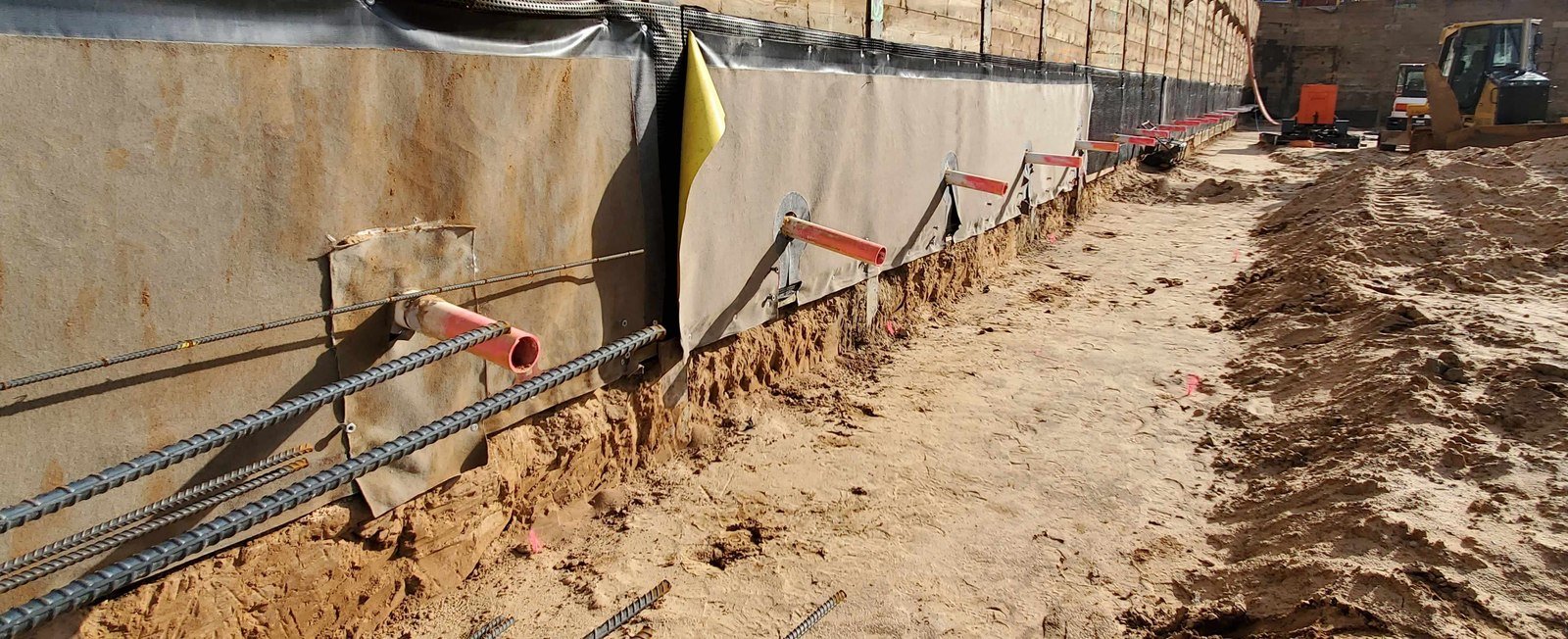
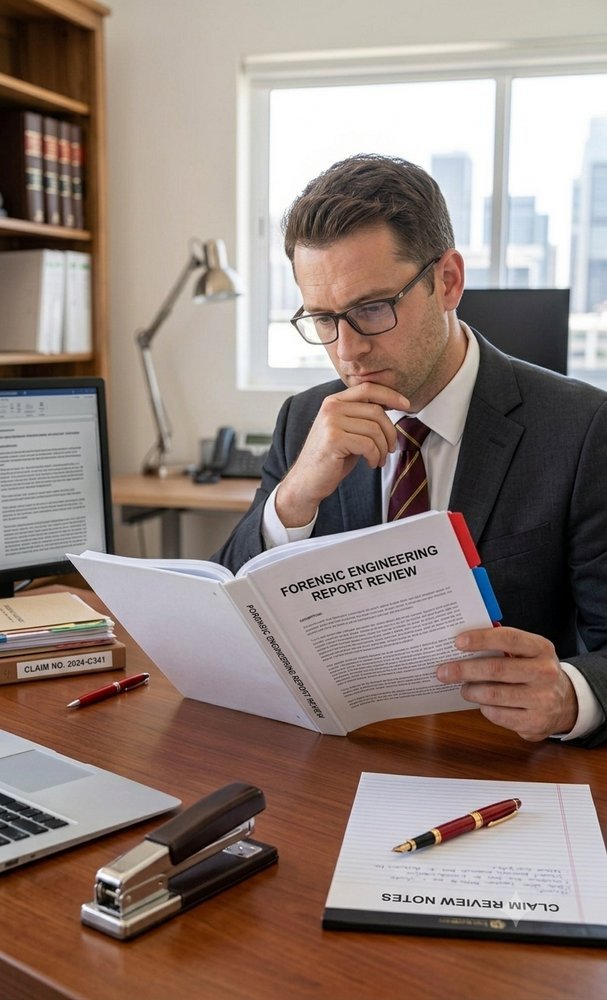
A forensic construction report is a record of what someone looked at on a building, what they measured or tested and what they concluded from it. Attorneys, insurance carriers and owners all end up relying on these reports, often without the construction background to tell a careful investigation from a thin one. The good news is that the questions a builder or investigator asks of a report are practical ones. You do not need to be an engineer to ask them.
This article walks through five checks our team applies when reading any forensic report, whether it came from a colleague or from another firm. None of them is about whether the conclusion is right. They are about whether the report shows its work well enough that a reader can tell.
Five Checks From the Field Side
- Does the stated method match what was actually done on site? Most reports open with a methodology section that names a standard or approach. For a wall leak investigation that is often ASTM E2128, the Standard Guide for Evaluating Water Leakage of Building Walls. E2128 is a guide. It describes an evaluation approach (reviewing the design and construction documents, inspecting the wall, then testing where testing is warranted) rather than a fixed testing sequence every investigator must follow. So the question is not whether each step was run in a set order. It is whether the report explains what it reviewed, what it inspected and why it tested where it did. A report that cites E2128 but shows no document review or no inspection before water testing leaves a gap between the method it claims and the work it describes.
- Is every conclusion tied to an observation or a test? A sound report reads as a chain. An observation in the field, a test result or a document leads to a finding. The finding then leads to a conclusion. Read each conclusion and ask what it rests on. If the answer is a photo, a moisture reading, a spray test at a marked location or a sheet in the plans, the chain holds. If the answer is only the author's general experience, note it. Experience is part of what an investigator brings, but a conclusion that rests on nothing in the file is the one readers will ask about first.
- Are alternative causes addressed? Water at a window head can come from the window unit, the flashing, the weather barrier behind the siding, a roof or deck above or condensation. Cracked slab-on-grade can come from soil movement, shrinkage, missing control joints or overloading. A report that names only the cause it settles on reads as one-sided even when that cause is correct. Look for a section that lists the reasonable alternatives and says what observation or test ruled each one out. If that reasoning is missing from the report, it may exist only in the author's notes. A reader then has no way to weigh it.
- Do the photos show what the captions say? Pull every photo the report cites for a specific finding and compare it against the caption. Is the location identified on a plan or elevation? Is there a scale or a reference point? Does the photo actually show the lapped flashing, the missing fastener or the stained sheathing the text describes? Mismatches are usually innocent: a renumbered exhibit or a photo swapped during editing. They still matter, because a reader who finds one wrong caption has reason to wonder about the rest.
- Is each opinion inside the author's discipline? Construction problems often cross trades. A single report may touch structural framing, waterproofing, mechanical systems and cost. Check the author's stated qualifications against each opinion. A general contractor can speak to means and methods, sequencing and standard of care in the trades. A structural load conclusion normally belongs to a licensed engineer. A repair cost estimate should come from someone who prices work. When a report reaches outside its author's discipline, the better practice is to say so and point to the specialist who supports that part.
Who Gets the Most Out of These Checks
- Owners and associations can use them to decide whether a report gives enough detail to scope and bid a repair or whether more investigation is needed first.
- Insurance carriers can use them to see whether a cause-of-loss finding is supported by testing on the actual building or rests on assumption.
- Attorneys can use them to understand how a construction investigator reads the same document. How that bears on a case is counsel's call.
In our principals' prior work, the reports that held up best were rarely the longest. They were the ones where a reader could follow each conclusion back to a photo, a reading or a drawing without having to ask the author.
Reading for the Chain, Not the Story
Most people read a report front to back for its narrative. The five checks above ask you to read it the way an investigator builds one: method first, then evidence, then alternatives, then exhibits, then the qualifications behind each opinion. A report that passes all five is easier to rely on, easier to repair from and easier to defend. A report that fails one is not necessarily wrong, but it tells you where to ask the next question.
PCC is a construction forensics and construction management firm, not a law firm. Readers should rely on their own counsel for how any legal rule applies to a report or a dispute.
This article is a general informational overview, not legal advice. It does not create an attorney-client or expert-client relationship.